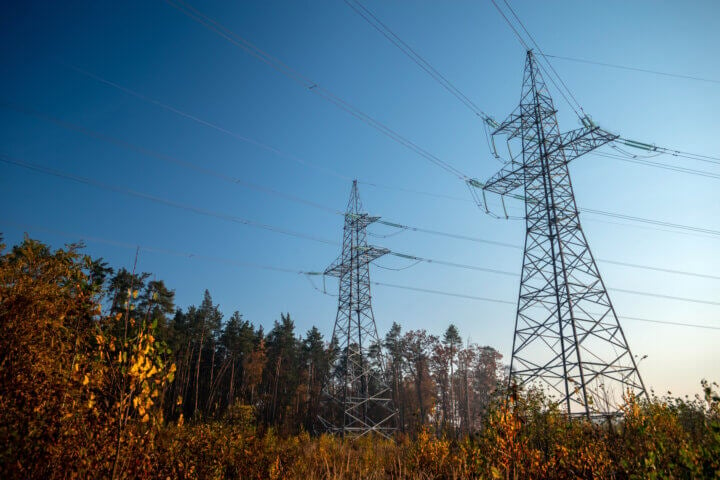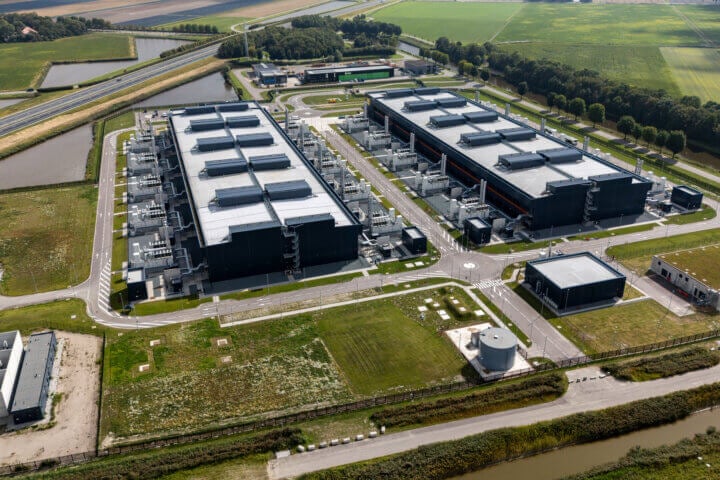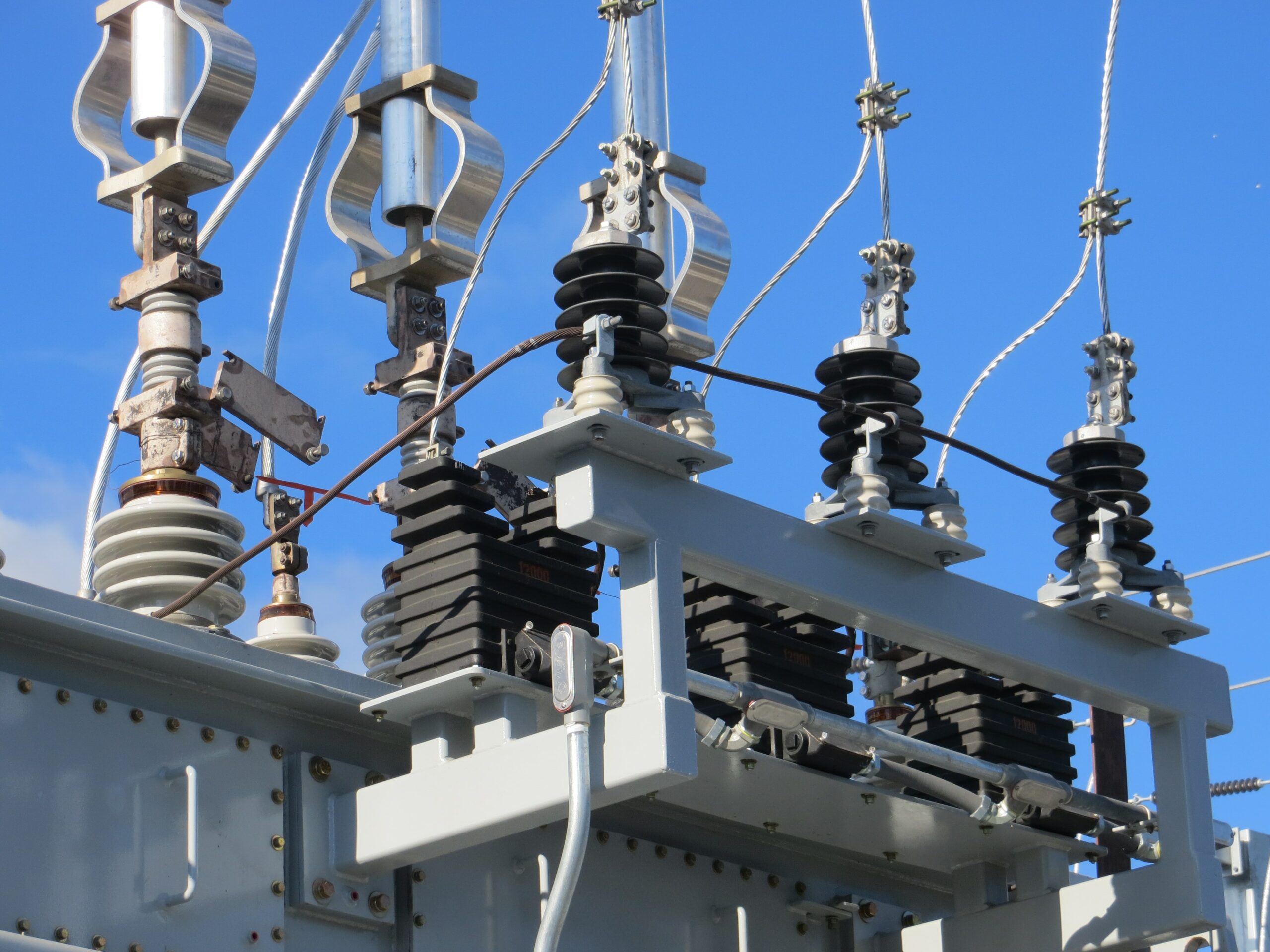
Affordable and reliable electricity is, more than ever before, the foundation for American economic growth and security. That is certainly true for artificial intelligence and data centers. But this isn’t just a data center story. Advanced manufacturing, reshoring industry, transportation, and buildings are all increasingly reliant on abundant low-cost electricity. So too is our national defense—from military bases and the companies that supply them to the military communities where affordable and secure electricity is essential to mission readiness.
All of this is driving electricity demand growth at a pace and scale we haven’t seen in a generation. After almost two decades of nearly flat electricity demand, projections now show more than 45 gigawatts of increased demand by 2035, a compound annual growth rate of more than 2 percent. In an industry where even 1 percent annual growth is considered significant, that is a major shift.
At the same time, concerns about affordability are rising. Electricity prices have increased substantially over the past five years, with residential retail prices rising even faster, often outpacing inflation. That leaves us with a difficult challenge: We need to grow the grid rapidly to support economic growth and bolster natural security. But affordability and inflation pressures mean every dollar spent on the grid must deliver maximum value for customers. The margin for error, to put it bluntly, is getting smaller.
To inform the path forward, the Electricity Customer Alliance (with partners at National Grid and Converge Strategies) recently commissioned a study from S&P Global CERA Consulting to examine what a cost-effective electricity system capable of meeting these challenges might look like. Given the ongoing debate in Washington over permitting reform and transmission policy, we asked the question: What role does new electric transmission capacity play in future cost-effective electricity systems?
S&P modeled the most cost-effective mix of investments in electricity generation and transmission needed to reliably serve demand across several possible futures. To isolate the role of transmission, the analysis examined two demand scenarios: a baseline projection of electricity demand growth and a higher-growth scenario. It analyzed these under two different transmission expansion scenarios: one that assumes that today’s constraints on building new transmission largely persist and another in which those constraints are relaxed.
The results demonstrate the customer benefits of smart transmission capacity expansion. According to the analysis, relaxing constraints on transmission expansion as a tool to meet demand could unlock substantial savings for electricity customers compared with the status quo. In fact, removing those constraints and building more transmission—especially interregional transmission that connects different regions of the country—could generate three times as much value for customers as transmission does under the constrained scenario. That translates into billions of dollars in potential savings: more than $12 billion in the base-demand scenario and over $15 billion in the high-demand scenario, with particularly large benefits in constrained regions such as PJM. The study shows that those savings translate into lower rates for customers at a time when affordability concerns are paramount.
The study also identified several areas where new transmission capacity could produce large benefits to customers. Most involve expanding transmission connections between regions such as PJM Interconnection and the Southeast, PJM and the Midcontinent Independent System Operator (MISO), and MISO and the Southwest Power Pool. These results mirror findings released in 2024 by the North American Electric Reliability Corporation, the nation’s reliability watchdog, and the Department of Energy’s recent draft National Transmission Needs Study, both of which find that interregional transmission capability provides important reliability and resilience benefits.
In short, the study’s results show that focusing on customer-centric transmission expansion—building the right kind of long-distance transmission in the right places—can address the challenges of rising demand, affordability pressures, and national defense and security. Building that kind of grid will require policy changes that focus regulators and industry on building high-voltage, multi-value interregional and regional transmission projects while bringing greater scrutiny to low-voltage, local projects that inefficiently meet discrete needs.
Three policy reforms are particularly important to building a grid that supports economic growth while improving affordability. The Senate’s recent permitting reform framework, the Bipartisan American Affordability and Jobs Act (BAAJA), includes several building blocks that begin to address these needed reforms.
First, Congress needs to reform permitting and transmission policies to make it easier to build interregional transmission projects. While all transmission can be difficult to build, interregional projects face particularly steep challenges because they cross multiple siting and permitting jurisdictions. They also tend to fall through the cracks of existing planning processes. Individual utilities focus primarily on their own service territories, while regional planning processes conducted under Federal Energy Regulatory Commission (FERC) rules generally focus on projects within their respective regions. Interregional projects can also introduce competition to incumbent transmission owners, giving those companies less incentive to pursue them.
BAAJA would address these barriers by requiring that utilities and grid operators conduct open and transparent interregional planning. It would also streamline environmental reviews and clarify the role of state and federal officials in siting and permitting those lines.
Second, federal leadership is needed to improve how transmission costs are allocated and to ensure that new investments meet customer needs in a cost-effective and efficient manner.
Cost allocation remains a significant hurdle, particularly for interregional projects that provide benefits across wide areas. Customers need greater assurance that costs are being assigned fairly, reflecting both who causes the need for new infrastructure and who benefits from it. Just as importantly, existing customers should not be left picking up the tab for investments needed to serve new large electricity users, such as data centers.
In addition, even as studies continue to confirm the need for additional transmission capacity, customers are seeing the transmission portion of their bills increase rapidly. Much of that comes from increased spending on smaller, lower-voltage local projects, which often face little oversight or review for economic efficiency and lack competitive discipline. Unlike interregional or regional projects planned through an open and transparent planning process, these smaller projects meet individual customer needs in a piecemeal and often inefficient fashion.
The Senate’s permitting framework includes important building blocks for providing greater transmission cost-allocation certainty and disciplining inefficient and unreviewed local transmission spending. It would establish a defined set of benefits from new transmission investment to guide planning and cost allocation, providing a clearer link between transmission investments and customer benefits and limiting disputes. It would also set new standards to ensure that data centers pay their fair share and allow states to petition FERC to review the prudence of investments in low-voltage, local transmission lines.
Third, we need to expand opportunities for large customers and new competitive entrants to invest their own capital in the grid. The nation’s infrastructure investment needs extend beyond transmission to electricity generation and distribution. No single segment of the industry can economically finance all these investments on its own. Utility balance sheets will face increasing strain as demand grows, which could put further pressure on electricity rates for existing customers.
One way to address this risk is to allow more large electricity users to finance the infrastructure needed to serve them. This approach is often described as “Bring Your Own New Generation,” in which customers help provide the generation capacity needed to meet their demand. But the same principle should extend to transmission and other grid investments as well. Expanding these opportunities can also help protect existing customers because it keeps investments needed for new large loads out of the utility rate base. That shields other ratepayers from the risk of cost increases and cost shifts from large users.
To meet the demands of a growing economy and expand economic growth to more people, America needs a larger, more capable electricity grid. Expanding transmission, especially between regions, can help meet that demand reliably and at a lower cost. But achieving that means removing unnecessary barriers to cost-effective projects and ensuring that transmission investments deliver value for customers. BAAJA provides a good start. Fully unlocking the opportunities to grow the grid and protect ratepayers by allowing large electricity customers to directly pay their own way would add to those gains. The choices we make today will shape the affordability and reliability of America’s electricity system for decades to come.