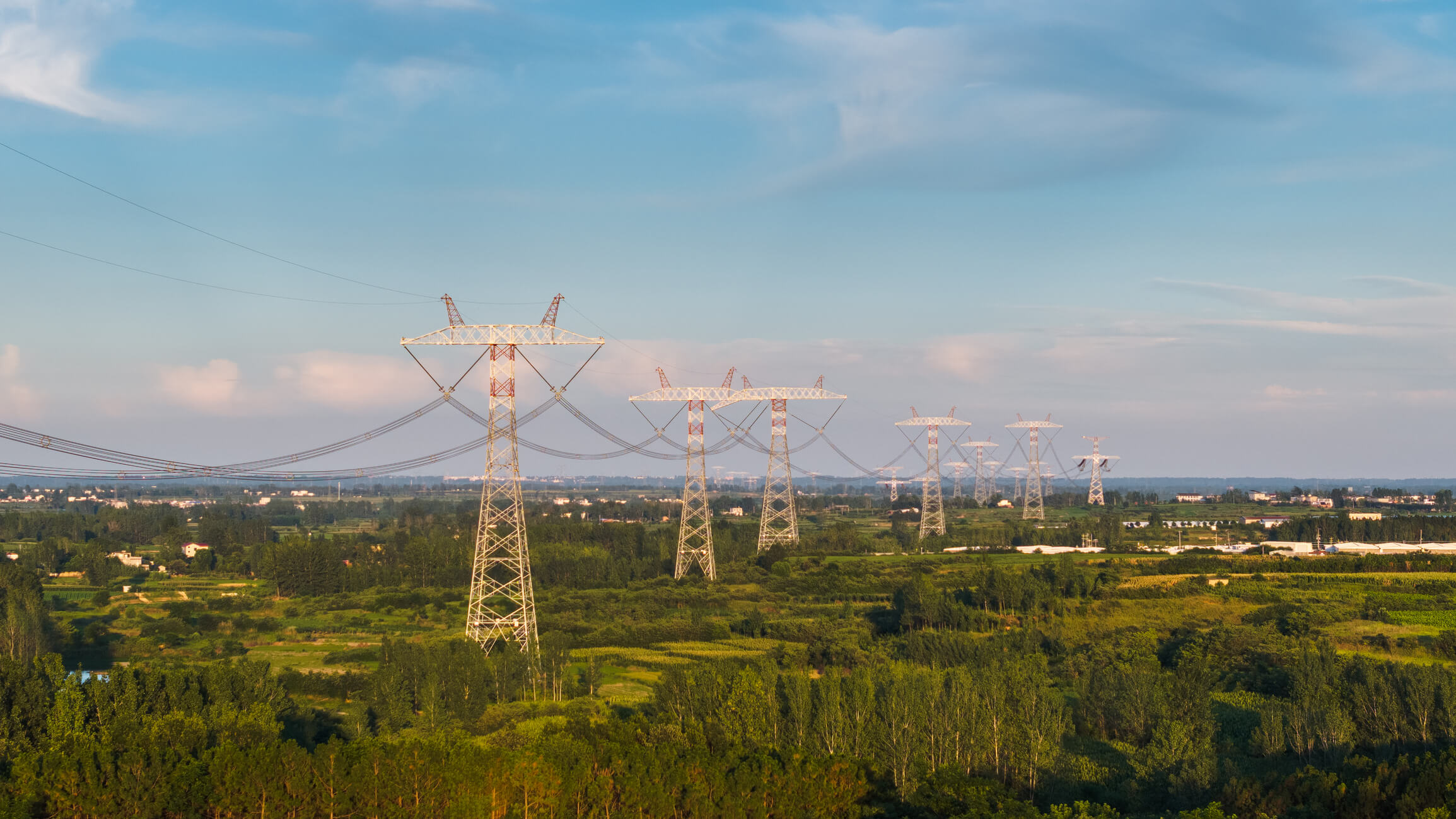

Look at your electric bill and you’ll likely find a transmission and distribution charge, which pays for the power lines that reach your home. Few of us ask what that fee covers, or how our fee compares with a nearby factory’s or data center’s. As emerging tech complexes reshape how we build and pay for the grid, that answer is becoming less clear. Without a change to the status quo, the cost of powering the tech boom could be unfairly shifted onto existing customers.
The question comes down to what utilities choose to build and whom they charge for it. The principles are intuitive: deliver reliable service at the lowest reasonable cost and charge customers in proportion to the service they receive. Lately, the gap between this ideal and reality has become hard to ignore for regulators and residents alike. The Bipartisan American Affordability and Jobs Act (BAAJA), a permitting reform bill introduced last month by a bipartisan group of senators, diagnoses this problem and delivers a much-needed fix.
The snag lies in how utilities make money, a system called cost-of-service ratemaking. A utility recovers the cost of new infrastructure plus a regulated profit margin, but only breaks even on its other expenses. This “spend money, make money” model rewards building new things, especially local projects that receive little regulatory scrutiny. Those costs are then divided among customer classes, such as households, businesses, and industry, but utilities have struggled to ensure energy-hungry IT campuses pay their full share. Households’ utility bills should not subsidize a data center’s.
BAAJA starts by giving states more power to call out wasteful spending on local projects, which are built within one utility’s territory and skip regional and often state review. Between 2009 and 2023, spending on these projects in PJM, the nation’s largest regional market, increased 26-fold. Under the bill, a state could report cases of wasteful utility spending to the Federal Energy Regulatory Commission (FERC) and help staff the investigative team. If investigators find ratepayer dollars were misspent, FERC could order planning changes, cut the utility’s future profit margin, and impose fines.
This provision would create both a venue to challenge costly, monopoly-developed projects that evade oversight and a deterrent against careless planning. But what gets built is just part of what BAAJA examines. Who pays, especially when new transmission facilities primarily serve new customers, matters just as much.
If the state builds a new highway off-ramp just to serve your business, you should cover its cost and still pay the same tolls for using the highway as every other driver. In theory, the grid should work the same way. New customers should pay for transmission upgrades built for them and for their use of the existing network.
Since 1994, however, federal policy has limited utilities to charging transmission customers only the higher of those two costs. The policy was written when utilities had reason to overcharge competing power plants seeking access to their lines, sometimes by billing them twice for the same wires. Its ban on “and” pricing, or charging both costs, is often interpreted to bar separate charges for the existing system and new facilities. But today’s data centers rely on the existing grid and separately trigger upgrades that can cost hundreds of millions of dollars. Those are two different costs, not one cost billed twice. BAAJA requires large data centers to pay for both.
The legislation also confirms authorities and tools that federal and state regulators can use to mitigate data center costs shifting onto existing customers. For instance, states could require collateral before a utility builds for a data center, keep the data center on the hook for transmission costs if it leaves early, and auction grid capacity to the projects that offer ratepayers the greatest benefits. Spelling out these tools in federal law could increase states’ interest in using them, while maintaining states’ independent role over retail electricity issues.
That said, the bill defines these protections by what a customer does, not how it uses the grid. A battery factory or refinery could cost the system just as much yet face different rules. Federal power law has long barred undue discrimination, so rates typically follow costs rather than the customer. Tying new price protections to a customer’s size and grid impact would protect ratepayers just as well while keeping that principle intact.
BAAJA treats grid development not only as a race for speed, but also a test of disciplined spending and fair cost allocation. In the highly monopolized electricity sector, affordable outcomes are far from guaranteed. But by giving states the right tools to oppose and deter waste and making data centers pay their full power bill, BAAJA puts everyday customers first.