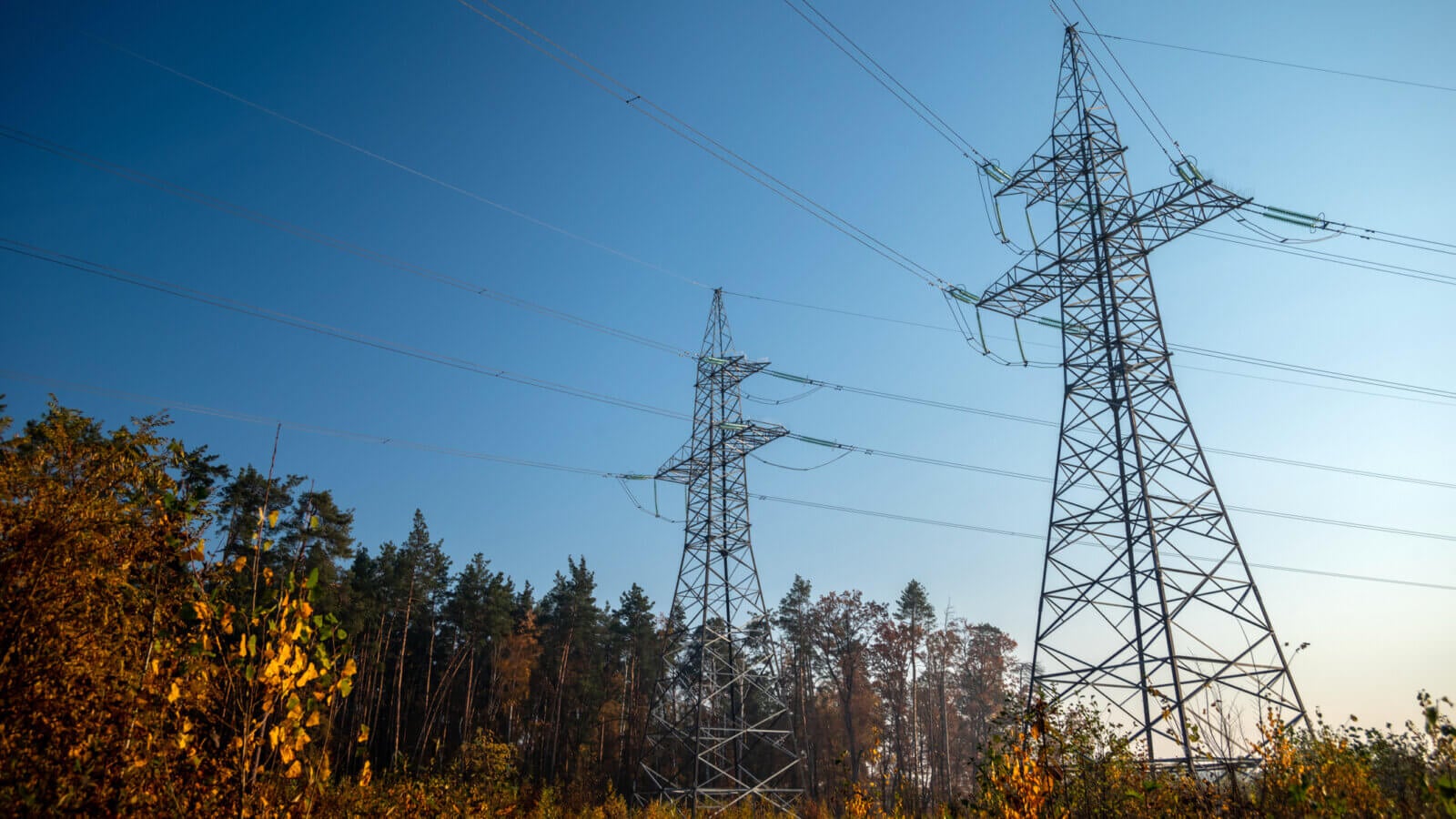
As Americans see their electricity bills rise, utilities are spending record sums on the grid while building fewer of the long-distance lines it needs. Investor-owned utilities are on track to spend $1.4 trillion on the power system through 2030, yet the country added just 400 miles of high-voltage transmission in 2025, down from 4,000 miles in 2013.
The reason is a regulatory regime that favors local projects over long-haul lines. Utilities propose and build low-voltage, local projects without competitive bidding and with less regulatory or permitting scrutiny, then earn a regulated return on every dollar invested. It’s no surprise then, that these projects have grown as a share of total transmission spending. Meanwhile, high-voltage, long-distance lines that can deliver billions in benefits to customers face a fragmented planning and permitting process that can delay construction for over a decade.
The Bipartisan American Affordability and Jobs Act (BAAJA), introduced by four senators in September could change that, allowing regional and interregional transmission facilities to compete through economical, long-term planning and a last-resort federal siting backstop.
BAAJA starts by requiring that regional and interregional planning happen in the first place. Grid operators would have to use common assumptions, weigh a defined list of benefits, and select only projects that improve reliability, benefit consumers, and serve the public interest. The Federal Energy Regulatory Commission (FERC) has already moved in this direction for regional planning, but its order does not require interregional planning, and a future commission could change it. Putting both in statute would make the planning process more durable.
Even after a large transmission line is planned, it still has to be sited, meaning the developer must secure rights to the land it crosses. Within a single state, utilities generally have eminent domain authority under state law, with compensation for landowners. Multistate lines face a harder path. One state commission can block a project that serves several states, and some states deny siting authority to developers that are not in-state utilities. Interstate natural gas pipelines can obtain federal eminent domain with a FERC certificate, but transmission lines have no equivalent authority.
BAAJA would give FERC “backstop” authority to approve a line and grant eminent domain only after states have had the first chance to act. FERC could step in only if a state lacked authority over the project or the developer, failed to act within a year, attached conditions that made the project untenable, or denied it. Eligible lines must carry at least 230 kilovolts, which limits the authority to bulk transmission and leaves local lines to the states. Projects would also have to meet the public interest, consumer benefit, and reliability improvement criteria. Importantly, if a developer asks FERC to step in, the Commission would have to take landowners’ input into account. As with gas pipelines, transmission developers would be required to negotiate with landowners in good faith before going to court.
Federal eminent domain for transmission is contested, with concerns that it would override state siting decisions and weaken protections for private property. Lawmakers could ease part of that concern by keeping the compensation standard landowners have under current law. The bill currently removes existing statutory language guaranteeing fair market value plus severance damages (the lost value in the remaining property because of the land taken). The Constitution would still require just compensation, but retaining that standard would tell landowners in advance what they are owed.
Regional and interregional grid projects can deliver low-cost power that would otherwise go unused and import electricity from hundreds of miles away when local plants fail. Today’s planning and permitting rules make many of them impractical to build. BAAJA would give them a fair shot at competing with the local projects that now dominate transmission spending.