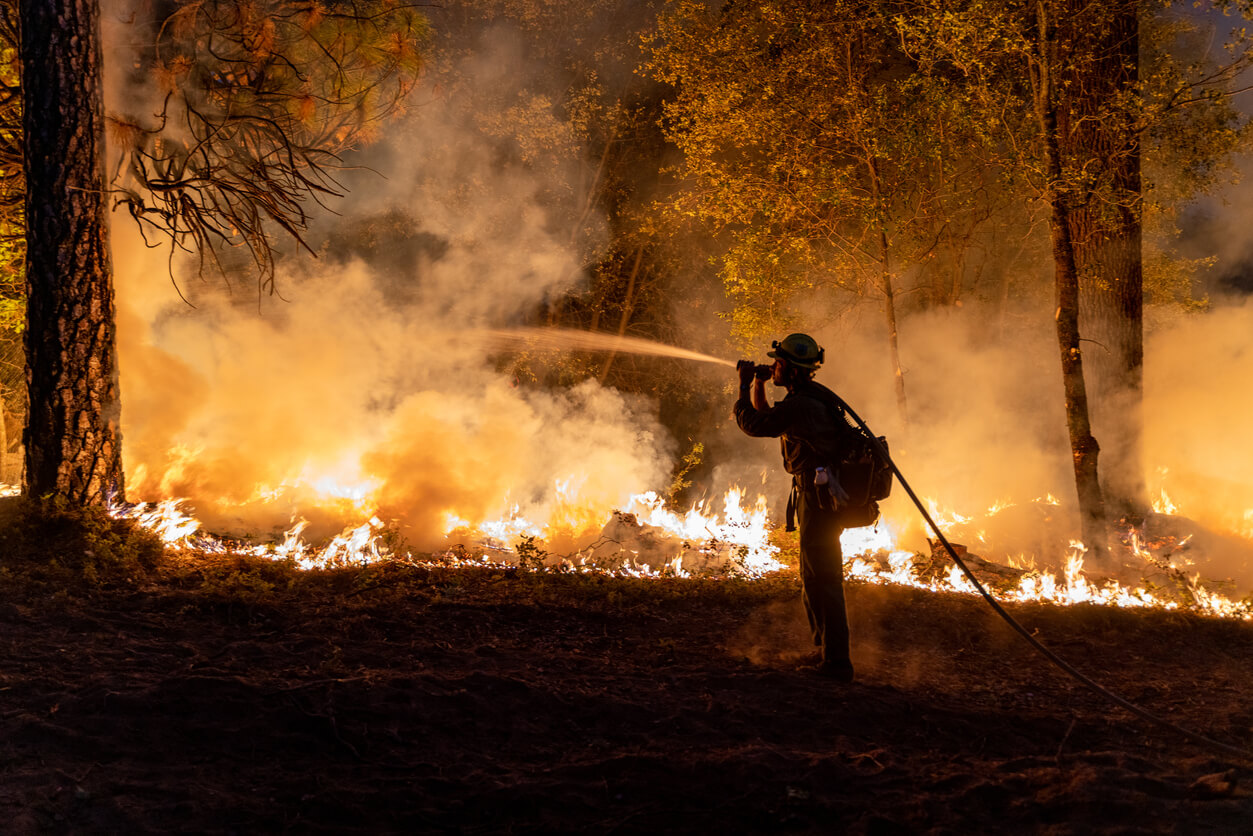
The 2024 wildfire season was especially severe, with 84,897 wildfires reported across the U.S. As we enter the drier summer months this year and observe National Wildfire Awareness Month (May), it’s an important time for policymakers to evaluate how we prepare for, prevent, and respond to these fires. One bill that seeks to better prepare the country for fires is the Fix Our Forests Act (FOFA).
FOFA compiles several bills targeting wildfire risk, forest health, and emergency fire response.
During a legislative hearing held on Tuesday, the Acting Associate Chief of the Forest Service, Christopher French, testified on behalf of the USDA. His testimony alluded to USDA’s strong support for the Senate version of FOFA, requesting only minor changes.
As French noted in his testimony, “Our National Forests are in crisis due to uncharacteristically severe wildfires, insect and disease outbreaks, invasive species, and other stressors whose impacts have been compounded by too little active management.”
French’s testimony broke down the bill’s key titles and USDA’s support of each to show how FOFA tackles these challenges.
Title 1: Landscape Scale Restoration
Title 1 of the Fix Our Forests Act focuses on large-scale forest restoration to reduce wildfire risk and improve forest health. To better target high-risk zones, it creates designated “fireshed management areas,” supported by new and innovative tools like a public Fireshed Registry and a Wildfire Intelligence Center.
Environmental reviews often delay critical forest management efforts for up to 7 years for those requiring an EIS. The bill expands the size and speed of forest treatment projects by streamlining burdensome environmental reviews and boosting collaboration with states, tribes, and local districts. It also takes on legal and bureaucratic delays, which French notes often cost a project between $100,000 and $125,000. Ramping up prescribed fires and utilizing grazing livestock for management will reduce the fuel for future fires.
>>>READ: Biden Says There’s a Wildfire Crisis, But Opposes A Common-Sense Solution
Title 2: Protecting Communities in the Wildland-Urban Interface
This title addresses the protection of communities at greatest risk of fire (those located in the wildland-urban interface). The bill would establish an interagency program and new research initiatives to promote fire-resistant construction of new homes and buildings, improve accountability in community grants, and expand eligibility for federal wildfire defense funding.
The title also strengthens vegetation management near powerlines and creates a new categorical exclusion for removing hazardous trees, often allowing fires to burn hotter, faster, and with higher flames. Finally, it addresses fire suppression funding by standardizing cost-share agreements with state and local partners, though French warns this could limit flexibility in managing complex, multi-jurisdictional fires.
Title 3: Transparency, Technologies, and Partnerships
This last title aims to boost transparency in firefighting, test new, innovative technologies, and build partnerships to strengthen wildfire resilience. It calls for annual reporting on hazardous fuel treatments, pilot programs for advanced fire detection and communication tools, and expanded use of biochar through public-private partnerships.
The title also mandates a broad review of federal wildfire response, considers structural changes to firefighting agencies, and pushes for more accessible forest management planning data. To improve the health of eastern forests, it adds efforts to restore white oak ecosystems, a critical part of the ecosystem that faces threats from pests and diseases.
>>>READ: Addressing the Wildfire Crisis With the Fix Our Forests Act
While French’s testimony emphasized strong support for FOFA, the USDA did raise a few concerns. The agency opposes containerized aerial firefighting systems, citing operational challenges and safety risks to firefighters on the ground. It also recommends technical revisions, including pile burning in prescribed fire authorities and preserving flexibility in cost-share agreements with state and local governments. These changes, USDA suggests, would help ensure the bill’s framework translates effectively into the field.
The Fix Our Forests Act would empower the Forest Service and stakeholders to fix our forests, protect communities, and ensure firefighters have the tools to face the challenges ahead.