America has always been an innovative country. In America, economic freedom fuels both innovation and environmental progress. The more we innovate, the cleaner our environment tends to get. This pattern holds for most economically free countries.
As C3’s Free Economies are Clean Economies 2025 report found, there is a strong positive correlation between the World Intellectual Property Organization (WIPO)’s Global Innovation Index and Yale’s Environmental Performance Index. Essentially, innovative countries have cleaner air, cleaner water, healthier ecosystems, and lower emissions from intensive industries than less innovative countries.
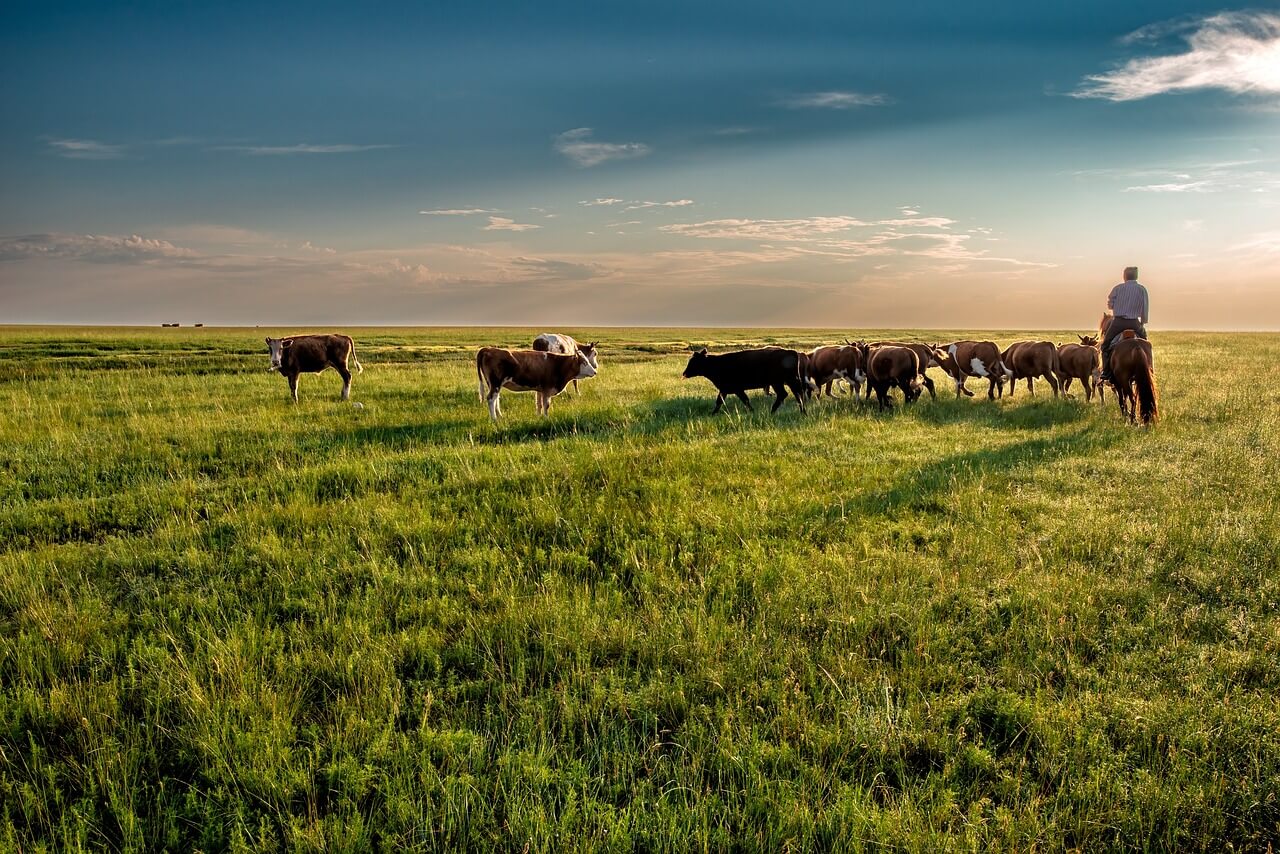
This correlation shows itself across many sectors of the American economy. Agriculture is no exception. While often portrayed as a significant environmental burden, American ranching and beef production are far from what the media portrays them to be.
As R Street’s Philip Rossetti recently wrote, U.S. beef is among the most climate-friendly in the world.
Despite producing over 26 billion pounds of beef annually and ranking among the world’s top beef producers, the U.S. has a remarkably low emissions intensity. It’s roughly one-third that of Brazil’s, and much lower than that of China or the European Union. Compared to India, the U.S. beef sector is more than seven times more emissions-efficient per kilogram of beef.
When it comes to producing more with less environmental impact, American ranchers are leading the world. Innovation in feed, genetics, grazing management, and methane reduction strategies has contributed to making U.S. beef among the most sustainable on the planet.
Innovations in feed typically fall into two categories: regenerative pasture-based practices and advanced feed practices, such as feed additives or precision feeding in feedlots. Both approaches are key components in reducing enteric methane emissions; however, regenerative practices offer additional benefits, including improving biodiversity and wildlife habitats, enhancing soil health, improving water quality, and reducing the need for fertilizer.
One regenerative practice leading the way is rotational grazing, where livestock are continuously grazed on different portions of pasture for a short period before moving onto the next. This allows grass and soil to recover, leading to healthier forage for cattle to feed on, which improves digestion and helps to reduce methane emissions. This practice also helps soil to store carbon more effectively.
While typically tested in feedlots, advanced feeding practices are also compatible with pasture-raised cattle. Would you have guessed that adding seaweed to the diets of grazing cattle would help reduce methane emissions by up to 40 percent, without harming their health or weight? Probably not, but researchers at UC Davis have found it to be true, building on previous studies that found seaweed supplementation reduced enteric methane emissions by 82 percent in feedlot cattle and 50 percent in dairy cows.
C3 Solutions recently traveled to Nebraska with the American Conservation Coalition (ACC) and ClearPath to gain firsthand insight into agricultural innovation. One of the stops on our trip was the Klosterman Feedlot Innovation Center at the University of Nebraska–Lincoln, where we saw emerging feeding technologies in action.
At the center, researchers are exploring ways to raise cattle more sustainably on a scale comparable to a typical feedlot. Precision feeding, which is tailoring each animal’s diet to its specific needs based on growth stage, weight, and production goals, is a key part of that work. It’s a practical, data-driven approach that minimizes waste, improves efficiency, and supports a cleaner beef industry. By using these techniques, they measure the emissions and environmental impact of different methods while maintaining a strong focus on animal welfare. This isn’t just good for the environment. It’s also economically smart, helping producers reduce feed costs, increase productivity, and enhance overall herd health.
With American farmers leading the way in many of these practices, it’s no surprise that our cattle industry is far cleaner than that of other countries. Practices like these show that when economic freedom drives innovation, we can achieve a thriving agricultural sector and a healthier environment.