As many airlines try to reduce their respective carbon footprints, a range of solutions are in development, from electric planes to more eco-friendly “drop-in” fuels that require little or no modifications to current planes. In addition to greenhouse gas emissions, another major climate challenge for the airline industry is contrails. With the help of data and AI, American Airlines may be on to a cost-effective solution to significantly reduce the climate effect of contrails.
>>>READ: How AI Can Help Airlines Reduce Their Carbon Footprint
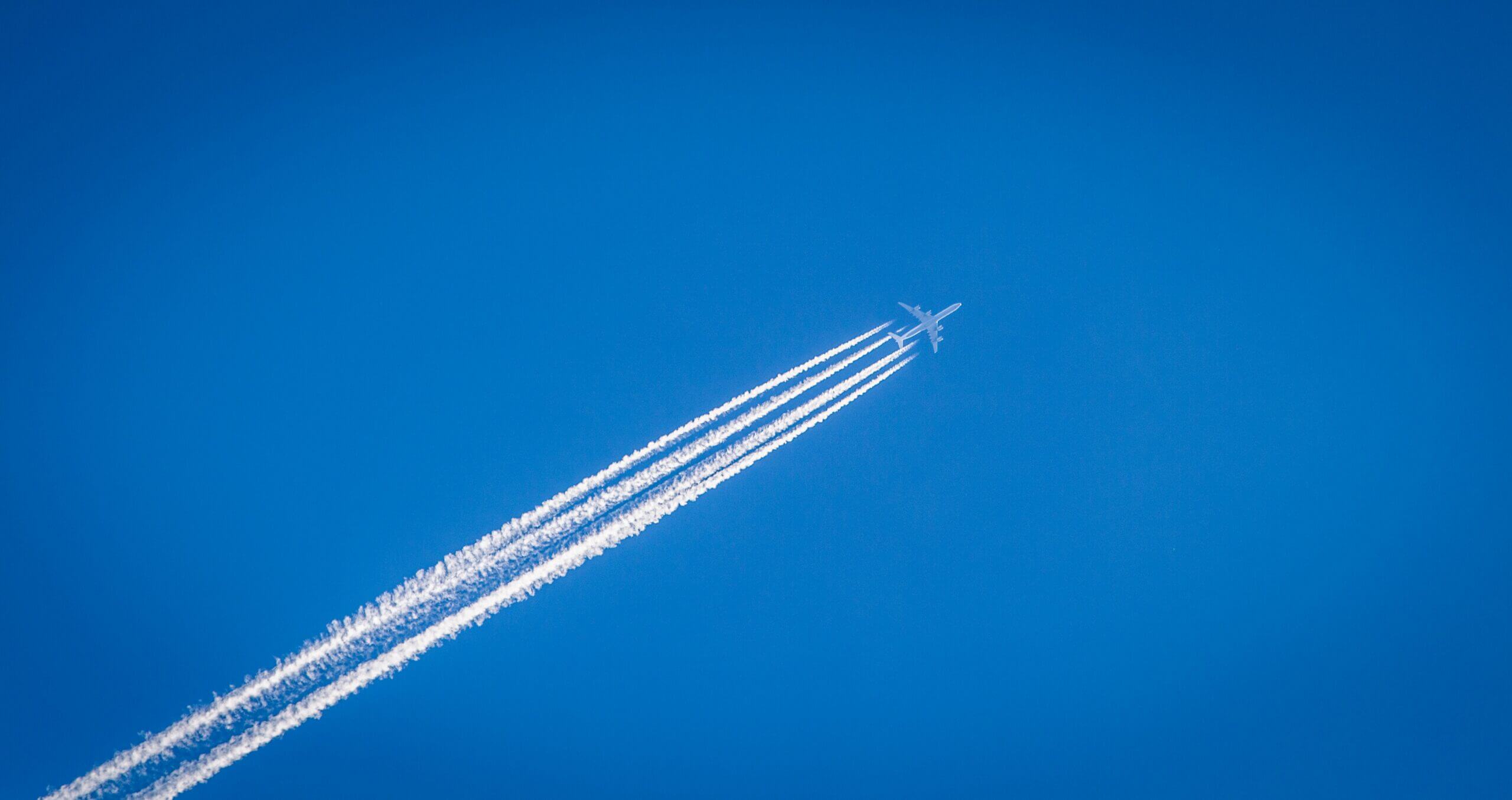
Contrails, or condensation trails, form when jet exhaust emits hot, humid air in a cool area with low vapor pressure. Forming clouds in the sky, contrails are the aviation equivalent of seeing your breath on a cold day. With respect to air travel, they have an outsized climate impact. Several studies, including the most recent Intergovernmental Panel on Climate Change report, have found that the contrails represent 35 percent of the industry’s climate impact. In total, it is estimated that two-thirds of aviation’s warming impact comes from non-Co2 impacts (primarily contrails and soot).
In partnership with Google and Breakthrough Energy, American Airlines is exploring whether pilots can avoid creating contrails for minimal cost. Using satellite imagery, weather forecasting models, and flight path data, test results have been promising. Per a recent post on Google’s blog:
A group of pilots at American flew 70 test flights over six months while using Google’s AI-based predictions, cross-referenced with Breakthrough Energy’s open-source contrail models, to avoid altitudes that are likely to create contrails. After these test flights, we analyzed satellite imagery and found that the pilots were able to reduce contrails by 54%.
Critically, the avoidance of contrails only burned an additional two percent of fuel, which is good news for the consumer and the planet. Reducing contrails may not be a huge cost for the industry, which travelers would likely incur through higher ticket prices. Moreover, minimal additional fuel usage ensures the climate benefit from reducing contrails exceeds any additional warming effect from increased carbon dioxide emissions. To the extent drop-in fuels or other green forms of flying become economically viable, the climate impact will be even greater.
Flying has not been particularly fun for many passengers. Flights are more expensive and delays and cancellations feel routine. Despite the headaches, and while still a relative luxury (90 percent of Americans have taken a commercial flight in their lifetime), flying is the safest form of travel and allows people to visit family over the holidays, see old friends, and explore the world. Despite calls by climate activists to halt commercial air travel, flying is not going away because it provides immense benefits to people.
>>>READ: Innovation is Unleashing a Climate Tech Renaissance
Although the airline sector only accounts for 3.5 percent of overall warming (including contrails), the industry is working to find innovative solutions. The ones that are economical will be the most durable. As a recent Washington Post article on costly green energy policies in Europe points out, “Surveys show strong support for reducing emissions in Britain and Europe. But the zeal dampens when the pollsters ask more detailed questions about the people’s willingness to make lifestyle changes or spend a lot of money.” The same holds true for America and other parts of the world where keeping the air conditioning on at an affordable price takes priority over reducing emissions.
The beauty of innovation is that it can accomplish both. The partnership among American Airlines, Google, and Breakthrough Energy is just the latest example.