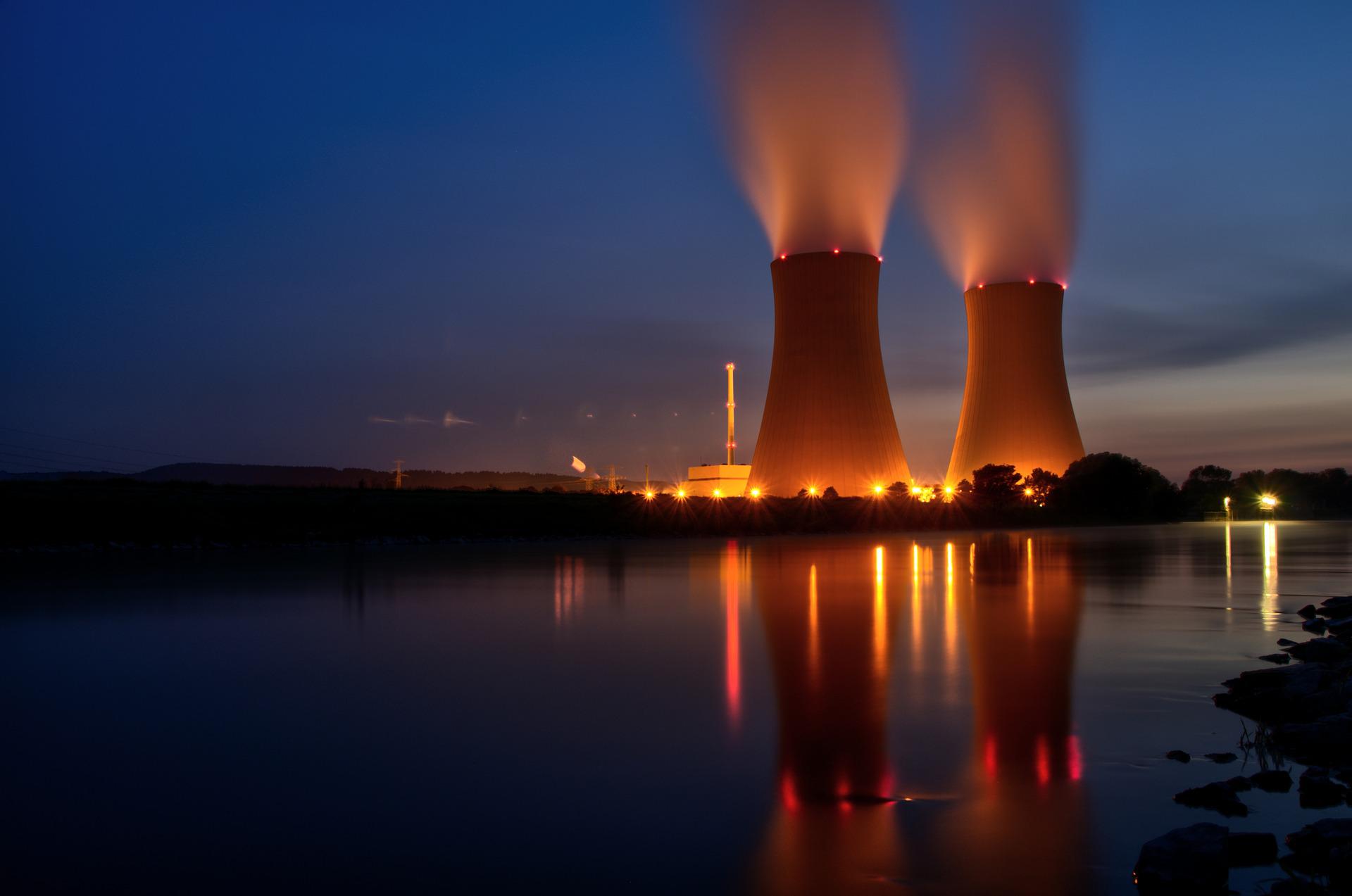
Recently, Netflix released a new documentary called Meltdown: Three Mile Island, which chronicles the “worst nuclear disaster on American soil.” The mini-series rightly exposes the mistakes that were made in Middletown, Pennsylvania on and after March 28, 1979, but it fails to provide more context to nuclear energy’s broader safety profile. While accidents, though exceedingly rare, must be acknowledged and remedied, we cannot allow them to unfairly tarnish the nuclear industry’s excellent safety record.
>>>READ: Germany and California’s Nuclear Mistakes
The accident at Three Mile Island 2 (TMI 2) was sparked by a combination of equipment failure and human failure. According to the Nuclear Energy Institute, “a gradual loss of cooling water to the reactor’s heat-producing core led to partial melting of the fuel rod cladding and the uranium fuel, and the release of a small amount of radioactive material.” The plant operators had not been adequately trained to deal with such a scenario, and erroneously turned off the emergency core cooling pumps, leading to a partial meltdown of the TMI 2 reactor.
Fortunately, however, the accident caused zero injuries or deaths. Moreover, numerous experts and studies have concluded that the radiation released into the air as a result has had no negative health effects on the population in the immediate area. The total rate of radiation exposure for the 2 million people in the vicinity of Three Mile Island amounted to about 1 millirem above the dose that Americans are naturally exposed to day-to-day. This is negligible. Consider, for example, that taking a dental x-ray exposes patients to 1.5 millirem of radiation, while residents of Colorado are exposed to as many as 90 millirem due to the state’s high-altitude, mountainous geography.
Less fortunate, however, has been the public perception. From the Natural Resources Defense Council to the Sierra Club, mainstream environmental groups have latched on to accidents like Three Mile Island to campaign heavily in favor of shutting down nuclear plants. The generational trauma caused by the accident has negatively impacted Americans’ views on nuclear power, leading to widespread fears of a future accident. Nuclear energy continues to poll significantly lower than other clean energy sources.
Yet, in direct response to the accident at Three Mile Island, the nuclear industry has worked hard to improve the safety and efficiency of its plants, through better training and oversight. The result was that nuclear plants in the U.S. went from operating at 55 percent to over 90 percent of the time.
Despite the trauma of a nuclear reactor meltdown, the fact that Three Mile Island caused zero deaths is indicative of nuclear energy’s broader safety track record. Indeed, studies show that nuclear energy is not just safe – it is in fact the safest method of producing energy. More people die every year falling off their roof while installing solar panels, than from nuclear energy.
>>>READ: Modernize Nuclear Energy Regulations to Fight Climate Change
In the meantime, nuclear power is currently the largest source of clean energy in the U.S., producing over half of zero-emissions power. It is also incredibly reliable, producing energy pretty much 24/7. When environmental activists campaign to shut down nuclear plants over safety concerns, what they are really doing is campaigning to shut down clean energy and increase emissions as a result. Consider, for example, that New York closed its Indian Point Nuclear Plant last year, causing emissions to spike by 35% in the state. Juxtaposed with the evidence that nuclear energy is, in fact, abundantly safe, it seems utterly bizarre and counter-productive in the fight against climate change.
Ultimately, it is important to remind ourselves – and the general public – that nuclear energy is not only clean and reliable, it is also safe. The story of Three Mile Island exposed certain failures within the nuclear industry, which have since been addressed, but it has not exposed anything fundamentally wrong with nuclear as a source of energy. We must not forget the broader context.
Christopher Barnard is the national policy director at the American Conservation Coalition (ACC). Follow him on Twitter @ChrisBarnardDL.