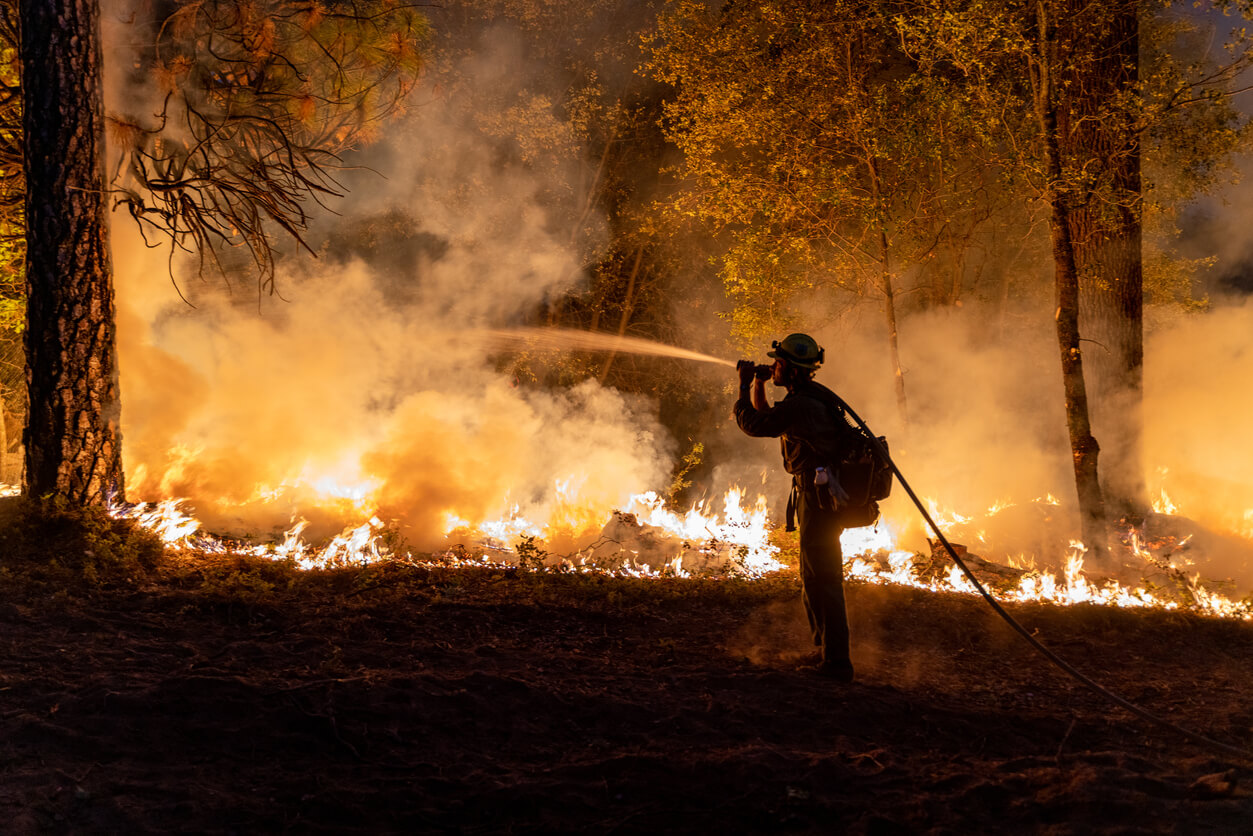
Wildfires have scorched over 8 million acres of American land and forests this year. With six of the most intense wildfire seasons on record occurring in the past seven years and a doubling in the frequency of extreme wildfire activity, this number is not surprising. Active forest management, such as mechanical thinning and prescribed burns, is essential to not only mitigate the risk of wildfires but to foster healthier, more resilient ecosystems. Numerous companies are stepping up to meet this challenge with innovative solutions to improve current forest management efforts. One of those companies, Kodoma Systems (Kodoma), has developed technology that deploys forest management on a larger scale by improving the safety and efficiency of remote forest operations.
A warming planet has contributed to longer wildfire seasons in the U.S. and around the world. Increased droughts, reduced snowpack, and early springtime snow melt have all contributed to lower water availability in hotter summer months and have therefore heightened wildfire risk. However, climate change alone cannot be blamed for the surge in wildfire activity. In fact, a study conducted by U.S. Forest Service scientists has found that mismanaged forests actually contribute even more significantly to this increase than climate change itself. Therefore, actively managing forests is a sensible approach to combat this issue, and technologies like Kodoma Systems make this process even more efficient and streamlined.
Kodoma is an early-stage startup launched in 2021 in Sonora, California, with a mission to “restore forests for future generations, help promote forest health for the long term, and accelerate the work that the state and federal agencies are calling for right now.” Kodoma aims to achieve this mission through its technologies: Kodoma Autopilot and Kodoma Connect. Kodoma Autopilot is remote-controlled machinery that can be operated from virtually anywhere, enabling precise mechanical thinning of forests to improve their overall health. This technology combines state-of-the-art video compression and advanced autonomous navigation algorithms with satellite connectivity, and cameras. It utilizes Light Detection and Ranging (LiDAR), which is a remote sensing method used to examine the surface of the Earth to ensure maximum safety and accuracy in remote operations.
Traditional on-site forest management involves teams of workers navigating challenging terrain using heavy machinery and hand tools to carry out tasks such as thinning and clearing debris. This method often requires significant manual labor, on-site supervision, and a substantial workforce, making it time-consuming, costly, and sometimes risky due to unpredictable weather and rugged environments. Kodoma Autopilot offers significant benefits over conventional forest management efforts, including maximized machine uptime, the ability to operate during both day and night shifts, remote management capabilities, flexible workforce scalability, and reduced operational costs.
In addition to the autopilot technology, Kodoma also offers technology for on-site forest management efforts. Kodoma Connect is a weatherized satellite connectivity device that offers high-speed internet access in remote locations. It is easily installed onto machinery and can withstand unpredictable and harsh conditions. This technology promotes a more prepared work environment for those on the job.
Active forest management is vital to reducing the economic and environmental costs of wildfires. The healthier a forest is, the less likely it is to catch fire. Kodoma Systems is leading the way to healthier forests with innovative technology that enhances efficiency and safety in forest operations.