Natural climate solutions are key to reducing emissions, improving ecological health, and addressing our greatest climate needs. One of the most important tenets of nature-based climate solutions is improving forest health and resiliency through hands-on forest management. While active forest management is essential to reducing wildfire risk, its practices are currently hamstrung by a considerable amount of government-imposed barriers including a broken regulatory system and insufficient funding for key conservation and management projects.
To address some of these issues, Senators Joe Manchin (D-WV) and John Barrasso (R-WY) recently introduced the America’s Revegetation and Carbon Sequestration (ARCs) Act of 2021. ARCs seeks to increase revegetation and reforestation on federal lands, address invasive species and promote active forest management. Through focused revegetation programs and expediting timber harvesting practices, ARCs would enhance ecological restoration, promote better forest management and reduce the risk of wildfires.
ARCs would direct the Department of Interior and Forest Service (within the U.S. Department of Agriculture) to undertake a regionally-based revegetation effort in consultation with states, tribes and private property owners if applicable. The bill largely applies to federal land, and activity by private landowners would be purely voluntary.
More specifically, Interior and Forest Service would develop a revegetation tool that would assess the needs of different regions, prioritizing areas that had been destroyed by wildfires, are at higher risk of invasive species and wildfires or offer great potential for carbon sequestration. The government would develop a 10-year revegetation plan that could be easily amended as conditions or circumstances change. The bill would also extend long-term contracts for tree and seed planting with local communities.
>>>>Prioritize Forest Management to Reduce Wildfire Risk
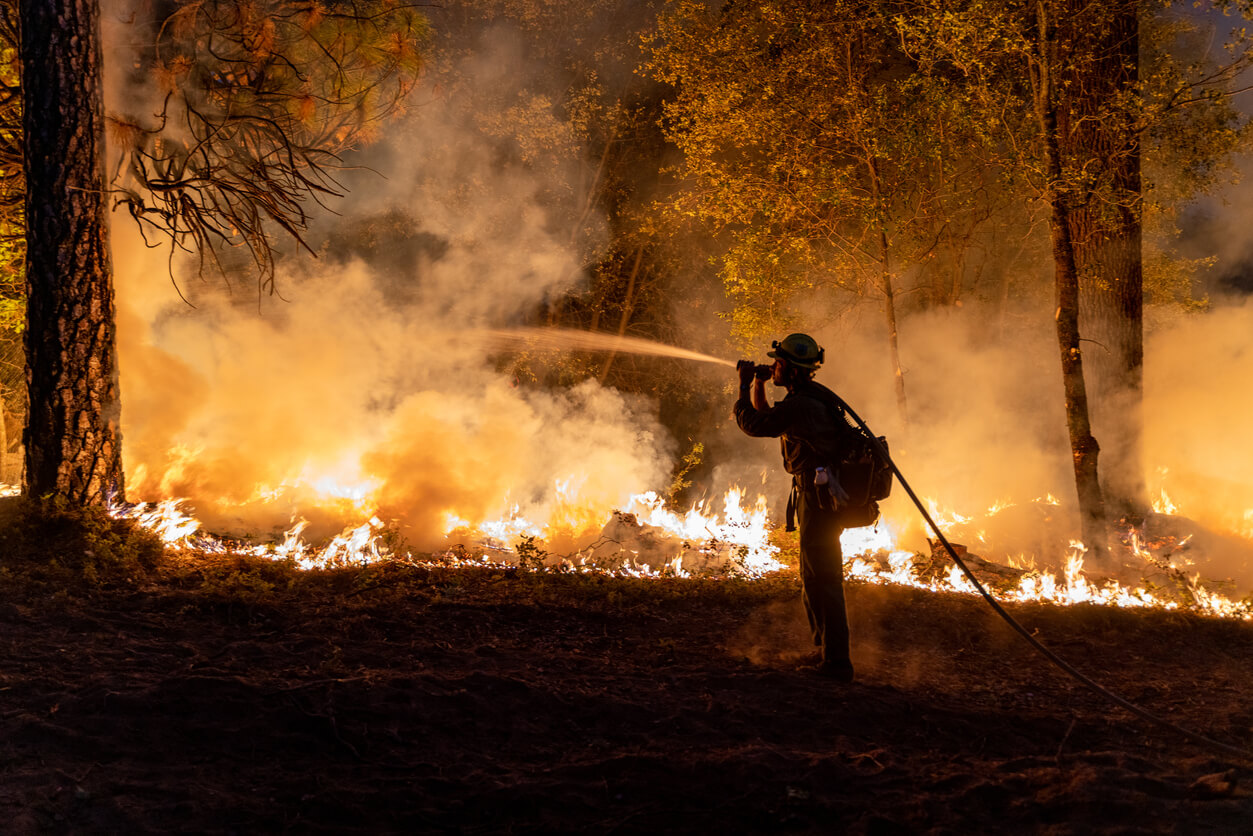
Additionally, ARCs would improve active management of federal forests by establishing a carbon credit program where revenue collected for carbon credits would be used by the Forest Service for projects such as prescribed burns, thinning or timber harvesting to reduce the intensity of wildfires. In effect, a business would purchase credits for an activity on U.S. Forest Service land that sequesters additional carbon, increases long-term storage in durable wood products or avoids carbon dioxide emissions. This would be supplemental to any appropriations the Forest Service receives for these activities.
Active management of federal forests is long overdue. According to the Property and Environment Research Center (PERC), the Forest Service has a restorage backlog on more than 40 percent of the 193 million acres of land it manages, and 63 million acres are at risk or very high risk of wildfires.
A purely voluntary carbon credit program, as seen in ARCs, provides a cost-effective way for businesses and individuals to reduce their carbon footprint while providing funding for key conservation and environmental projects. Additional revenue should be helpful, but Congress and agencies must reform costly regulatory red tape and excessive legislation that stalls conservation projects or blocks them entirely.
ARCs would also create and extend several forest and grassland research and data collection initiatives. It would formally authorize the experimental forest program, which consists of 76 experimental forests, 4 experimental ranges, and 4 experimental watersheds. These areas provide hubs for scientists to better understand and address issues like invasive species, root disease, old growth vegetation, wildlife habitat, fire resiliency and climate change. Advancements in research could accelerate the economic and ecological value of products like mass timber and better understand the environmental and climate benefits of active forest management.
Improved land management is good economic and environmental policy. The America’s Revegetation and Carbon Sequestration Act includes many practical measures to protect America’s forests, create collaborative efforts with local governments and the private sector and provide research programs to better understand the economic, environmental and climate impacts of better forest and rangeland management.
While providing key funding and research is crucial to improving forest health, including measures to create a more efficient permitting process and introducing protections against excessive and time-consuming lawsuits would bolster the chances of more successful management of federal forests.