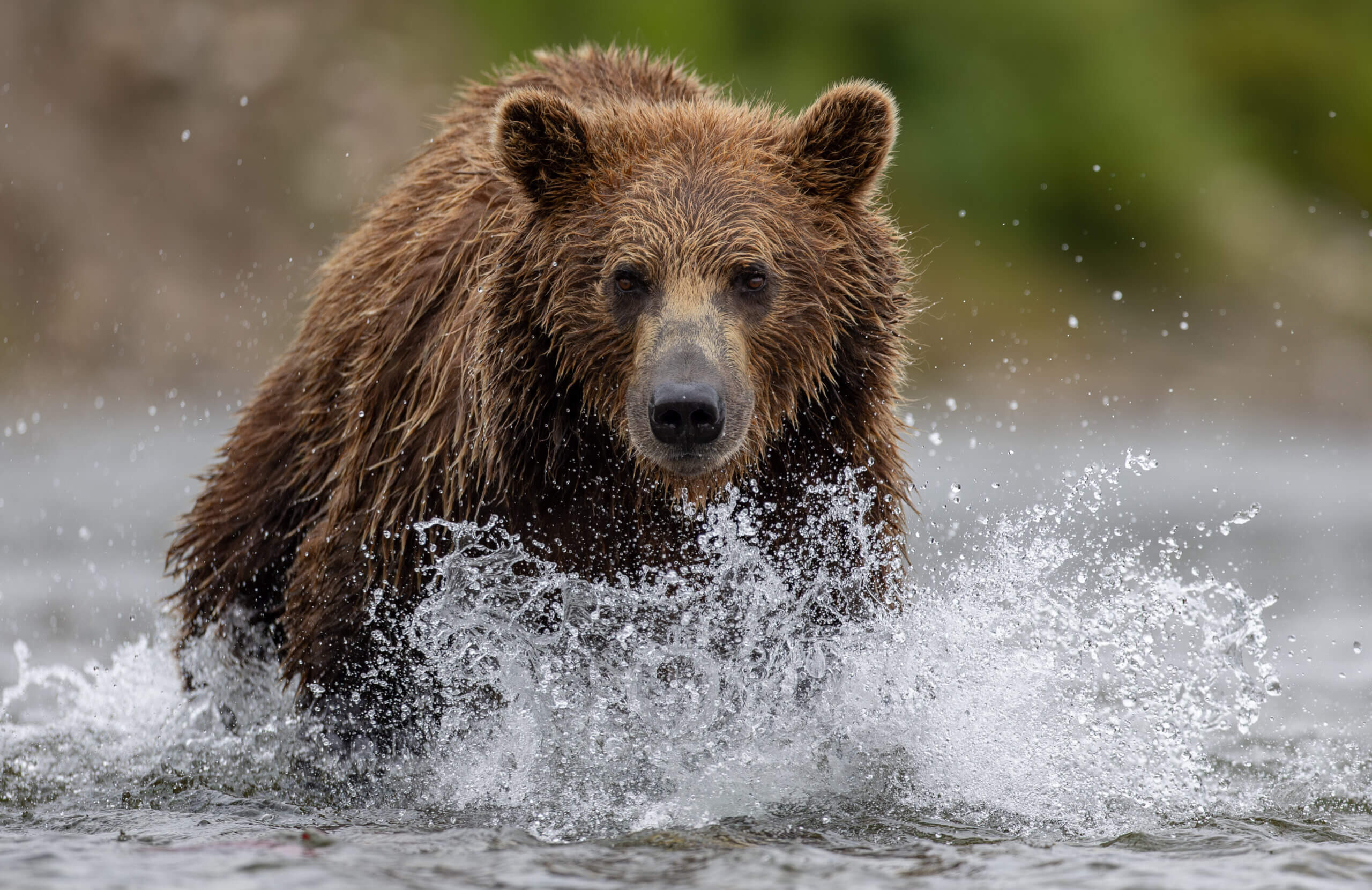
“The endangered species list is not a dean’s list,” Wyoming Governor Mark Gordon said this week, standing near Big Sky, MT, with Interior Secretary Doug Burgum and the governors of Montana and Idaho. “It’s time this bear graduates.” After decades of federal control and an amazing tale of conservation success in America, the Interior Department has announced it will shift the daily management of the grizzly bear back to the states. Grizzly bears would, however, remain listed as threatened under the Endangered Species Act.
The proposed rule is a revision under the ESA’s 4(d) rule, which governs how a threatened species can be managed short of full delisting. While the full details will be released later this week, officials made sure to point out that this change would not come with an open season for the bear, nor its delisting.
Northern Rocky Mountain governors and congressmen have long advocated for the delisting of grizzlies and the transfer of management back to the states. After two attacks in May, a fatal encounter in Glacier National Park and a separate incident that injured two hikers in Yellowstone, Montana Congressman Zinke tweeted “These tragedies are a sobering reminder that grizzly bear populations have recovered well beyond sustainable levels, and it is past time for the federal government to delist them and give states the management tools they need to protect both people and wildlife, “Delist the grizzly.”
But have the Grizzlies actually recovered enough to be handed to the states to manage? Studies show they have.
According to the U.S. Fish and Wildlife Service, the population in 1975, when the bear was listed, was a mere 700 to 800 in the lower 48. In 1993, the Service created a recovery plan that targeted recovery efforts in 6 ecosystems: the Greater Yellowstone, the Northern Continental Divide, the North Cascades, the Selkirks, the Cabinet Yaak, and the Bitterroot.
>>>READ: What’s Going On With the Grizzly Bear Listing?
While repopulation efforts in the North Cascades and the Bitterroot ecosystems have been unsuccessful, many of the other recovery areas have met or even exceeded their recovery targets. Criteria for recovery include meeting population targets and a certain number of female bears with cubs identified. GYE’s recovery goal is a population between 800 and 950 bears. FWS counted 1,050 in 2024. The NCDE has 1,068 resident bears, exceeding their recovery goals as well. Every bear management unit that’s supposed to have females raising cubs in it does, in both ecosystems.
While more details are yet to be released, state management of grizzly bears can be beneficial for conservation. Montana, Wyoming, and Idaho all have existing grizzly bear management plans in place, built with years of input from state and federal wildlife managers. The NCDE and GYE already operate under interagency conservation strategies meant to guide bear management during the 5-year monitoring period following delisting. This move could also open the door to real incentive-based stewardship rather than top-down regulation, in which private landowners are rewarded for conservation.
The Property Environment and Research Center has said in the past that moving management to the states, rather than a full delisting, can make litigation far less disruptive. Grizzly status has been changed numerous times since its delisting, resulting in a ping-pong match between states and the federal government. Each time there is a change, environmental groups sue. This middle ground is a great way to prove the states are ready to take over management.
We’ve long known that states and tribes know best how to manage the wildlife close to home. Countless examples across the U.S. prove this, from the American Alligator to the Brown Pelican. It’s time to give the grizzly bears a shot at becoming the next conservation success story.