This piece was initially published in The National Interest.
Whether oil or critical minerals, policymakers have long understood the economic, environmental, and geopolitical value of reducing reliance on foreign adversaries for natural resources. This policy principle holds true not just on land but also at sea. America and the rest of the world need a comprehensive response to China’s overfishing and aggressive fishing tactics, which overwhelm competitors and threaten biodiversity.
Overfishing is a textbook example of the tragedy of the commons. When everyone owns something, no one does. Fish are a common resource outside territorial waters where defined and legally protected property rights exist. Commercial fishers will retrieve as many fish as possible in international waters where property rights are unclear, unregulated, or nonexistent. If they don’t, others will. Even if it contradicts their long-term interest to have a robust marine stock, they race to take the most at the risk of permanently depleting the resources.
Many countries subsidize fishing through direct payments and low-interest loans for vessels and equipment. This is another textbook lesson in economics. If you subsidize something, you’re going to get more of it. The subsidies encourage commercial fishing, exacerbating the tragedy of the commons problems. Like many other sectors with significant strategic and economic value, China is leading the way.
China’s Fishing Fleet and Its Global Impact
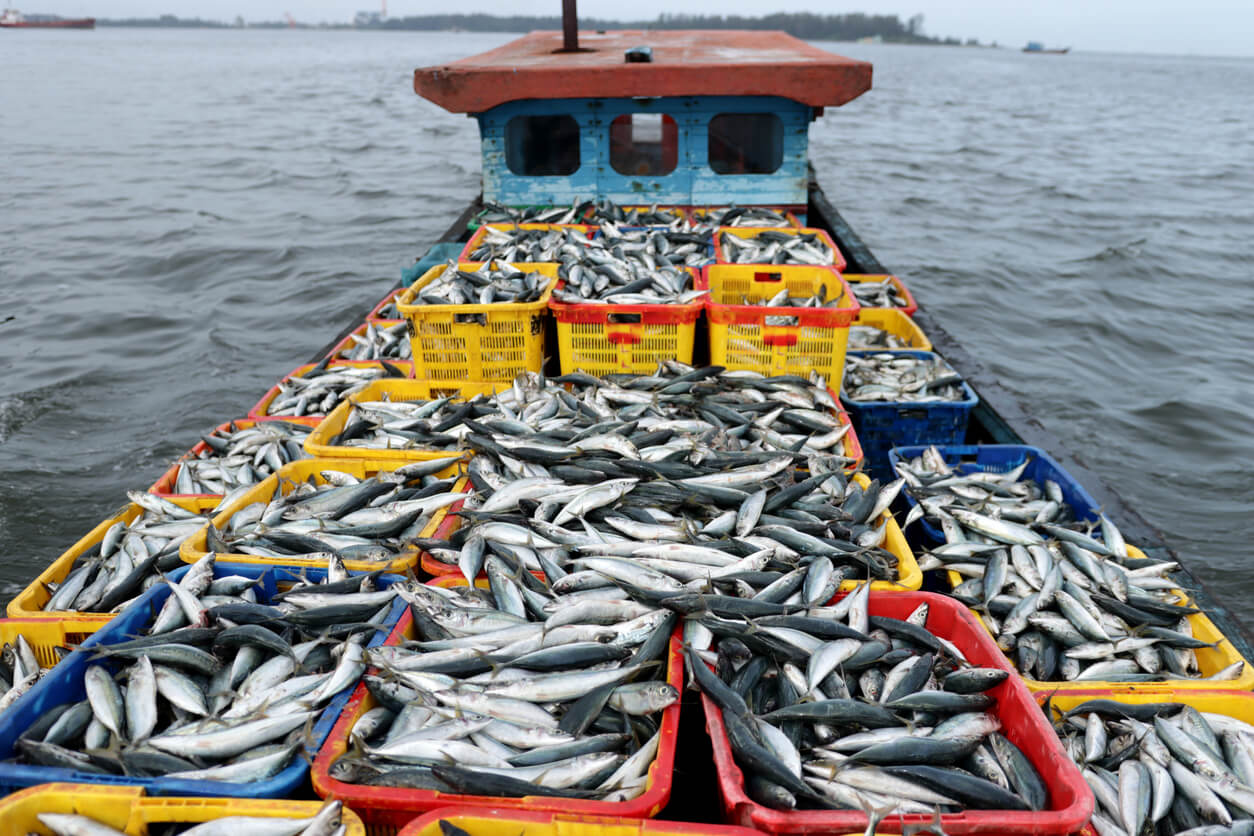
In recent decades, China has massively expanded its fishing fleet. With the world’s largest distant-water fleet at over 3,000 vessels, China is depleting fish stocks at an alarming rate, threatening the environment and the livelihoods of fishing communities worldwide. Fueled by subsidies estimated between $7.2 and $10.9 billion annually, Chinese vessels venture farther, stay at sea longer, and fish more intensively than would otherwise be economically viable.
Chinese fishing fleets have become notorious for their aggressive tactics and frequent violations of territorial waters. In many places, such as off the coast of Peru, their fleets hover at the edge of a country’s national waters. Investigations have documented Chinese vessels operating illegally in the exclusive economic zones of countries from West Africa to South America, often with their tracking systems deliberately disabled. Many of these vessels employ destructive fishing practices such as bottom trawling, which devastates seafloor habitats, and indiscriminate catch methods that result in significant bycatch of non-target species that are frequently discarded.
>>> READ: Five Organizations That Are Leading in Marine Conservation
Time for a Coordinated Response
Depleting the ocean’s resources and losing marine life through overfishing will have devastating economic and environmental consequences. According to the United Nations Food and Agriculture Organization, over one-third of global fish stocks are already fished at biologically unsustainable levels. China’s industrial-scale operations further strain these vulnerable populations, potentially pushing some species toward commercial extinction. Artisanal and recreational fishing industries will suffer, as could the overall viability of the seafood industry. Consumers will suffer if they have fewer choices at higher prices.
Marine ecosystems don’t recognize national boundaries, and the collapse of fish stocks in one region can trigger ripple effects throughout the ocean food web, threatening biodiversity worldwide. Subsidized overfishing results in more air and water pollution, and lost traps, nets, and lines only increase the environmental costs.
This represents both a challenge and an opportunity for the United States and our allies. Countries are fighting back against Chinese tactics, in some cases resulting in military operations that have sunk Chinese vessels. However, governments and international bodies can do much more to protect the ocean’s health and the seafood industry’s competitiveness. A multi-pronged approach that revitalizes America’s seafood industry through smarter regulation, reforms international fishing governance, and establishes bilateral and multilateral cooperation will provide better economic and environmental results.
First, the United States needs to liberalize its domestic fishing industry. President Trump’s Executive Order (EO) to restore American seafood competitiveness is a good start. From Maine to Hawaii, American fishing companies would benefit from modernized regulations and opening areas while maintaining strong environmental safeguards. The EO also calls on the National Marine Fisheries Service to embrace innovative technologies for more accurate monitoring and data collection. Doing so will help the government and industries make better informed decisions regarding fisheries management and the issuance of permits.
>>> READ: Market-Based Solutions at Sea: Leveraging the WTO to Save Our Oceans
Innovative tools like electronic monitoring can provide more accurate, timely information about catch levels while reducing the regulatory burden on fishermen. Expanding aquaculture in federal waters with the appropriate environmental safeguards could supplement wild-caught seafood and create new jobs in coastal communities. Streamlining the permitting process for U.S. fishing operations would help American producers compete globally without compromising our conservation values.
Secondly, the United States should lead a coalition of like-minded nations to pressure China and other countries to eliminate harmful fishing subsidies. The World Trade Organization has made progress, but implementation remains slow. Targeted sanctions against seafood imports from countries that maintain these market-distorting subsidies may accelerate reform. Additionally, strengthening regional fisheries management organizations, ensuring they have the authority and resources to enforce sustainable catch limits and combat illegal fishing. Last year, the U.S. Coast Guard and the Argentine Navy began conducting joint exercises to monitor waters and combat unlawful Chinese fishing.
The American seafood industry is a global leader in innovative and sustainable fishing practices. Our waters remain among the most productive and well-managed in the world. By addressing the market distortions caused by subsidies, working with allies to get tough on China, and refining our regulatory approach at home, we can create and bolster the seafood industry while restoring the oceans.