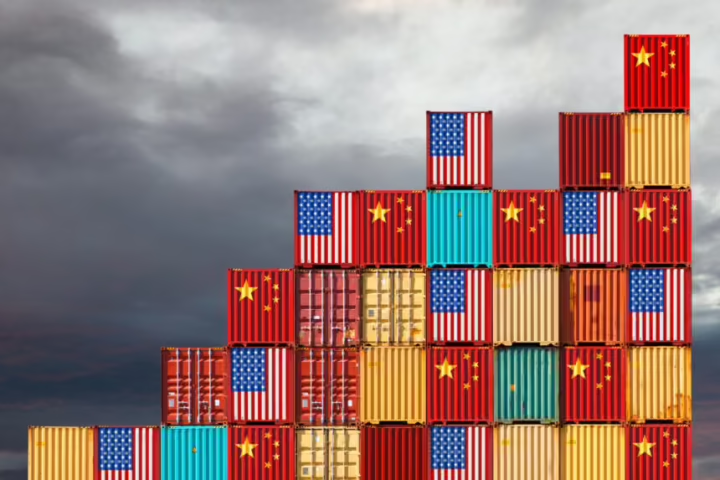
A year ago, President Trump and Chinese President Xi Jinping met in Busan, South Korea, and agreed to a truce over critical minerals. The two countries had been in the middle of an escalating trade war. China agreed to suspend a set of sweeping rare earth export controls, including licensing rules for products made anywhere in the world containing even trace amounts of Chinese rare earths. The United States, in turn, rolled back several tariffs and paused some of its own export restrictions.
That deal is set to expire in January, and Washington is now strongly considering expanding interventionist policies, including price floors, equity stakes, and government-backed stockpiles. But before going further, it’s worth asking how serious the threat from China’s mineral dominance really is. A careful look at how China’s critical-mineral dominance developed, and how Beijing has used it, suggests the threat is real but narrower than many think. A proportionate U.S. response would prioritize keeping inexpensive minerals flowing to American manufacturers and consumers while reducing dependence on China where the risks of disruption are greatest.
The cycle of escalating restrictions and temporary truces is hardly ideal. Last month, the two sides extended their latest truce, but only to January 10, two months past its original November expiration. China’s sweeping export controls, issued in October 2025, remain suspended, not rescinded. A separate suspension of China’s ban on gallium, germanium, and antimony exports to the United States ends on November 27. And China’s April 2025 requirement that exporters obtain licenses for seven medium and heavy rare earths was never lifted.
Official trade data suggest the remaining restrictions have had an effect, though transshipment through third countries and smuggling are harder to track. China’s shipments of controlled compounds and metals to the United States and Japan remain below historical levels, and prices outside China for some heavy rare earths now far exceed those inside it. Trade has not stopped entirely, however, as China’s rare earth magnet exports hit a record in September, and Beijing says it will keep approving licenses to Europe whether the U.S. truce is extended or not.
Washington, meanwhile, is building out a set of policies aimed at reducing reliance on China. On January 1, a Pentagon rule takes effect barring defense contractors from delivering rare earth magnets, tungsten, or tantalum that were mined, refined, or separated in China. The administration has also guaranteed MP Materials a price floor for the rare earth oxide it produces, taken equity stakes in several other mining and materials companies, launched a minerals stockpile backed by a $10 billion federal loan, and proposed creating a trading bloc to enforce minerals price floors through adjustable tariffs. In Congress, a proposed bipartisan bill would create a $2.5 billion strategic reserve charged with stabilizing prices, in part to insulate the economy from Chinese price manipulation.
Before committing to more of these tools, policymakers should understand how China acquired its mineral dominance—and the limits of its ability to weaponize it.
China’s Minerals Dominance
China’s dominance of critical minerals is not in question. Of the 60 minerals on the U.S. Geological Survey’s 2025 critical minerals list, China accounts for a majority of global mining of 16 and refines more than half of global production of 32, including 90 percent or more of rare earths, graphite, and gallium. A common narrative is that this dominance was the result of a premeditated strategy by China to capture strategic chokepoints, drive out competitors, and build leverage over the West.
A closer look at the history suggests the story is much more mundane, driven largely by ordinary cost advantages combined with a state-led industrial strategy that prioritized cheap inputs for China’s own manufacturing. China has some genuine geological advantages, but most critical minerals are also found in large deposits elsewhere. Its real edge is in processing and refining, where economies of scale and decades of accumulated expertise have lowered costs to give Chinese firms a technological lead. Lower labor costs and weaker environmental enforcement were also major factors, especially as China’s minerals industry expanded in the 1980s and 1990s, at a time when those costs were rising in the West.
State support reinforced those advantages, but Beijing’s policies have served specific domestic goals rather than a single geopolitical plan. China is not only the leading producer of many critical minerals; it is also the leading consumer of them. Over the past few decades, it has used production quotas, export restrictions, and consolidation of the rare earth industry to balance competing interests at home. Its miners and refiners benefit from selling abroad at world prices, while its manufacturers benefit when export limits keep minerals at home and their inputs cheap. Layered on top of that tension are Beijing’s efforts to curb illegal mining and the pollution that rare earth processing can cause. The resulting policies have looked less like a coherent strategy for global leverage than a series of shifting compromises among those interests.
This origin story matters because it implies that there are costs to China’s use of minerals dominance as a weapon. An industry built to serve domestic economic interests can’t be weaponized without sacrificing some of them. Restricting exports costs Chinese miners and refiners revenue, and it pushes foreign buyers to find new suppliers and engineer their products around Chinese minerals, as they did after China’s 2010 restrictions. Those costs do not eliminate the risk, but they limit how far Beijing is likely to go.
Does China Manipulate Mineral Prices?
Much of the push for price floors and government-backed stockpiles rests on a stronger claim that China manipulates global prices by flooding markets to bankrupt Western competitors. Proponents of that view have pointed to the sharp rise and subsequent collapse of rare earth and lithium prices after 2022, and to Chinese government meetings with industry during that period. Another frequently cited example is the Jervois cobalt mine in Idaho, which halted construction in 2023 as cobalt prices fell amid rising output from a Chinese-owned mine in the Democratic Republic of the Congo.
Predatory pricing—the form of manipulation critics usually allege—requires a firm or government to sell below its own costs to drive out rivals, then raise prices to recoup its losses. The evidence most often cited does not meet this bar. It shows that China has a cost advantage that lets its producers outcompete rivals, not that they are selling below their own costs or recouping losses through higher prices later. If anything, the trend points the other way: U.S. dependence on China grew out of decades of cheap minerals, not a pattern of prices being pushed up once competitors were gone. At a surface level, most examples look more like ordinary market responses to supply and demand than deliberate manipulation.
Rare earth and lithium prices did rise sharply in 2022 and then collapse. But the spike followed a surge in electric-vehicle and clean-energy demand, a supply crunch, and a broader commodity boom driven by the aftermath of the Covid pandemic and Russia’s invasion of Ukraine. Prices soon fell back toward their long-run averages. The meetings between Chinese officials and industry during this period don’t show a plan to undercut foreign rivals. Officials were urging companies to rein in soaring prices to protect Chinese manufacturers. That kind of intervention is misguided, but it should be familiar to anyone who has watched American politicians accuse companies of price gouging or reach for ill-conceived fixes when prices spike.
The closure of the Jervois mine similarly reflects ordinary market forces. The same high cobalt prices that drew investment to Idaho also spurred expansion at the Chinese-owned Kisanfu mine in the Democratic Republic of the Congo. But Kisanfu produces cobalt mostly as a byproduct of copper mining, and copper prices stayed high. When cobalt prices fell, Kisanfu kept operating and producing cobalt, while Jervois, which depended on cobalt alone and had much higher costs, could not survive the lower prices. That is how commodity markets work: high prices draw in new supply, prices fall as that supply comes online, and producers whose costs exceed the new price respond by cutting back or shutting down. Proving manipulation requires showing something more, namely that a producer deliberately sold below its own costs and expected to make those losses back later.
More broadly, prices for the critical minerals China dominates have followed the same commodity cycle as other minerals and metals in recent years: they rose and fell alongside non-China critical minerals, industrial metals, and other commodities, with no sign of the sustained, distinctive price declines that a strategy of flooding markets to drive out competitors would produce.
https://datawrapper.dwcdn.net/rWjQc/2/
A Proportionate Response
None of this means the risk from China’s mineral dominance is zero. China has restricted mineral exports repeatedly over the past three years, mostly in response to U.S. tariffs and semiconductor export controls rather than as unprovoked moves. Acknowledging that pattern is necessary for an honest accounting of what the broader trade dispute is costing, and it suggests that deescalation can reopen trade. But even if China’s dominance was not built with geopolitics in mind, it still carries geopolitical risks.
More concerning are China’s current restrictions on exports to Japan. In January, Beijing banned exports of dual-use items, including rare earths, to Japanese military end users after Prime Minister Sanae Takaichi suggested a Chinese attack on Taiwan could pose an existential threat to Japan. It is the clearest case yet of China using its mineral position for an explicitly geopolitical aim, and it might signal that Beijing’s calculus is shifting. Each time China uses its minerals as a bargaining chip, building the licensing systems and political precedent to do so, the next use may become easier and less costly, which makes the threat harder to predict than the past record alone suggests.
Still, any response must weigh that risk against the benefits of the inexpensive minerals China has supplied for decades. As long as China is willing to export to the United States, cheap and even subsidized Chinese minerals help American manufacturers and consumers, and keeping them flowing should be a priority. The risk of disruption is real, but it is concentrated in defense supply chains and a handful of materials like the heavy rare earths, which calls for targeted, mostly low-cost policies rather than a broad effort to rebuild every mineral supply chain at home. Stockpiles should be focused on defense needs. Permitting reform and lower regulatory barriers would make China’s position more contestable at little cost to taxpayers, as would removing trade barriers with allies and alternative suppliers.
Price floors, equity stakes, and large stockpiles should face a much higher bar. They put taxpayers on the hook, blunt the price signals that drive adaptation, and risk costing more than the disruptions they are meant to prevent.
For now, critical minerals policy remains unsettled, and the extended truce is quickly running out. Long-run supply chain risks may warrant targeted responses, but the immediate priority should be restoring access to the inputs American manufacturers depend on. That requires a clearer-eyed view of the China threat, and a commitment to deescalation.