By Drew Bond
Now that Joe Biden has been elected, he can start to make good on his promise to be an “American president” by looking at how both Democrat and Republican administrations approached energy and climate policy.
I’ve been there and worked through a presidential transition between President George W. Bush and Barack Obama. In 2007, I was appointed by Bush to the Department of Energy as a Senior Advisor for Technology Commercialization in the Office of Energy Efficiency and Renewable Energy.
It may have seemed like a peculiar path for the former Chief of Staff at The Heritage Foundation to then be working on clean energy, since renewables haven’t always been in favor with conservatives. Also, there was just two years left before Bush would leave office. Was that long enough to make a difference?
But for me, the path was clear. The U.S. had been fighting a war in Iraq over freedom. Oil prices had soared to more than $115 per barrel, and the U.S. was importing most of its energy. That made us too reliant on the unstable Middle East.
There had to be a way to generate more American-made energy that would help protect the environment and reduce our dependence on Middle Eastern oil. The conservative path would be to deliver a diversified approach to our energy production and reduce our energy dependence on our foes.
By the time he left office in 2009, I had helped President Bush promote practical ways of accelerating energy innovation. We worked with the DOE national labs, universities, industry, investors and entrepreneurs. Our focus was constantly on promoting market-driven solutions.
We focused the government on providing leadership by investing in R&D, facilitating pathways for technology to get to the market, and reducing barriers that impede innovation from becoming reality. We were working to address climate change, but to do so by encouraging energy security, economic competitiveness, and showing an overall commitment to leaving the environment cleaner and better for future generations.
As I look at the debates today about climate change and the extremes of alarmism and denial, I still know that innovation is the key to addressing all of these challenges. It’s through innovation that we can increase our economic competitiveness, decrease our carbon emissions and pollution, and strengthen our national security. Innovation brought us the natural gas revolution that simultaneously reduced our carbon emissions, increased our energy security, and increased our economic competitiveness around the world.
As far back as 2008, President Bush laid out a path to real progress. Although President Obama certainly differed from Bush in his decisions, at least Obama did not start from a posture of reflexive opposition, especially when it came to understanding the foundational importance of innovation.
As we approach weeks of Senate hearings for top nominees, including hundreds of questions about how to solve new and existing problems, it’s worth looking at how past administrations handled their central challenge of helping the United States remain a world leader in production while simultaneously slashing pollution.
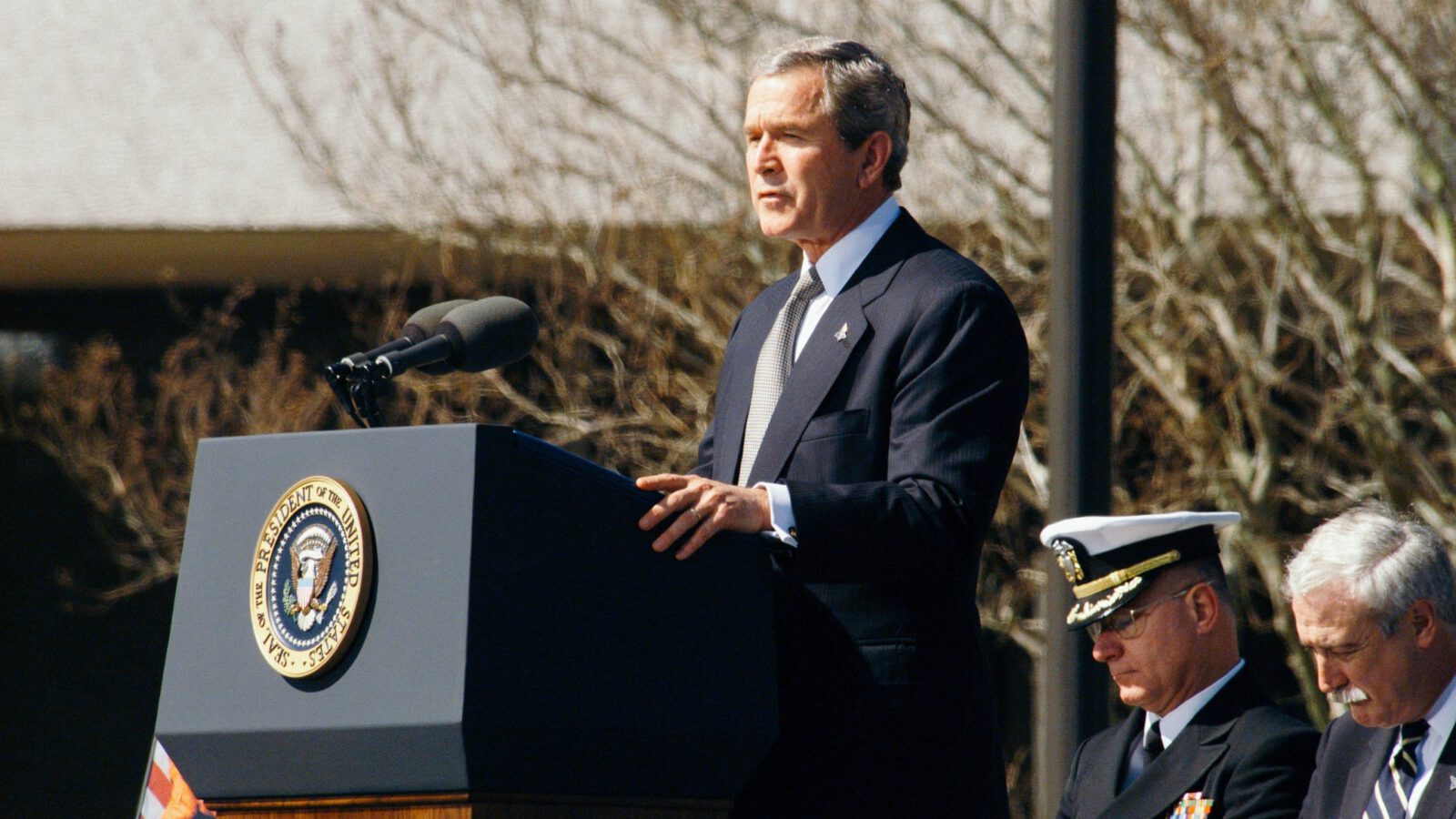
Here’s how Bush laid out his program more than a decade ago:
“Climate change involves complicated science and generates vigorous debate. Many are concerned about the effect of climate change on our environment. Many are concerned about the effect of climate change policies on our economy. I share these concerns, and I believe they can be sensibly reconciled.”
“The right way is to adopt policies that spur investment in the new technologies needed to reduce greenhouse gas emissions more cost-effectively in the longer term without placing unreasonable burdens on American consumers and workers in the short term.”
“The wrong way is to raise taxes, duplicate mandates, or demand sudden and drastic emissions cuts that have no chance of being realized and every chance of hurting our economy.”
“The right way is to set realistic goals for reducing emissions consistent with advances in technology, while increasing our energy security and ensuring our economy can continue to prosper and grow.”
“The wrong way is to unilaterally impose regulatory costs that put American businesses at a disadvantage with their competitors abroad — which would simply drive American jobs overseas and increase emissions there.”
Read Bush’s full remarks here.