In business, the concept of “yes, and” is crucial. Instead of saying “no” to a new idea, try saying “yes,” but then adding some nuance or support to the general idea. “Yes,” Google was an amazing search engine. “And” it was able to monetize its platform by selling ads. The “and” made all the difference.
>>>READ: The Fusion Case for Fission
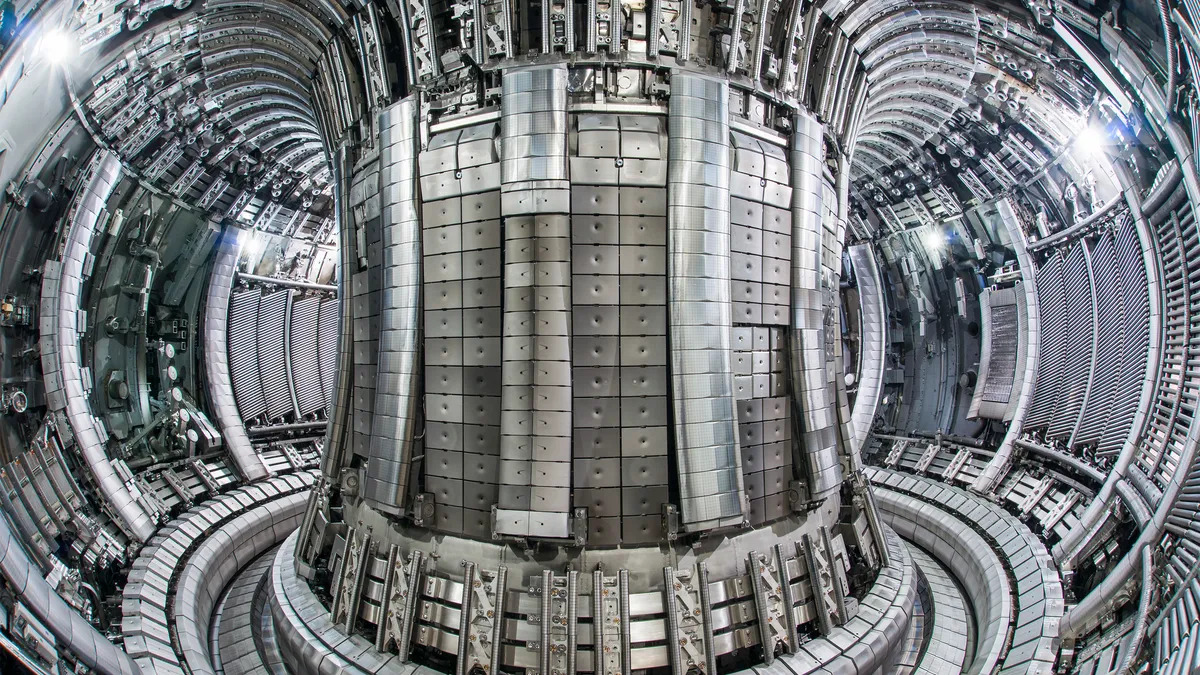
By now you’ve probably heard about one of the big scientific breakthroughs that happened late last year when scientists at Lawrence Livermore National Laboratory were able to carry out a fusion reaction that made more energy than it took to start it – a net energy gain.
Fusion is the main source of our energy here on Earth. In our sun (as in other stars), fusion happens endlessly. Stars combine two hydrogen atoms to form a helium atom. The combination releases energy, and it is this energy that lights and heats our planet. All solar energy started from fusion, whether that is the energy captured by a solar array on your home or the energy unlocked by burning fossil fuels such as oil or coal.
The importance of this scientific achievement cannot be overstated. Yet, the process is still years away from being commercially viable. In fact, the joke about fusion has long been that it’s always just ten years away. But with this latest breakthrough, it’s time for a dose of “yes, and.” Yes, keep experimenting as much as possible. There are more ways than one to generate fusion, and scientists should try to find the most effective, least energy-intensive method.
“And,” the government should offer as much support as it can for breakthrough technologies like fusion, while also balancing the budget.
The best way to do that is for Congress to end tax subsidies for technologies that are already commercially mature, such as solar, oil and gas, and wind, and instead put that money to work towards breakthrough technologies not yet commercially available, like fusion. Mature, cost-competitive energy sources do not need help from the taxpayer. In fact, federal “help” for these sources can have the perverse effect of impeding energy innovation by putting potential breakthrough technologies such as fusion at a disadvantage.
>>>READ: Permitting Reform is Starting to Become a Bipartisan Priority
When politicians pick winners and losers by subsidizing already commercially available technologies, other promising innovations that do not enjoy such support tend to miss out. By going all-in on a breakthrough like fusion, the federal government would boost a technology that holds great future promise. Lawmakers should phase out the subsidies once the technology makes it through the “valley of death,” the time between the development of a new technology and the point where it is commercially viable.
The potential timeline for fusion isn’t clear. But if we make it, and other breakthrough technologies like it, a priority for taxpayer funded research, think of how much faster we could actually get to commercial applications of breakthrough technologies.
Congress is elected to set priorities. Balancing the budget while investing in breakthrough technologies like fusion should be a “yes, and” winning proposition for America’s economic strength and energy security. That’s how fusion could help balance the federal budget. Let’s just hope that we get to see both in our lifetime.