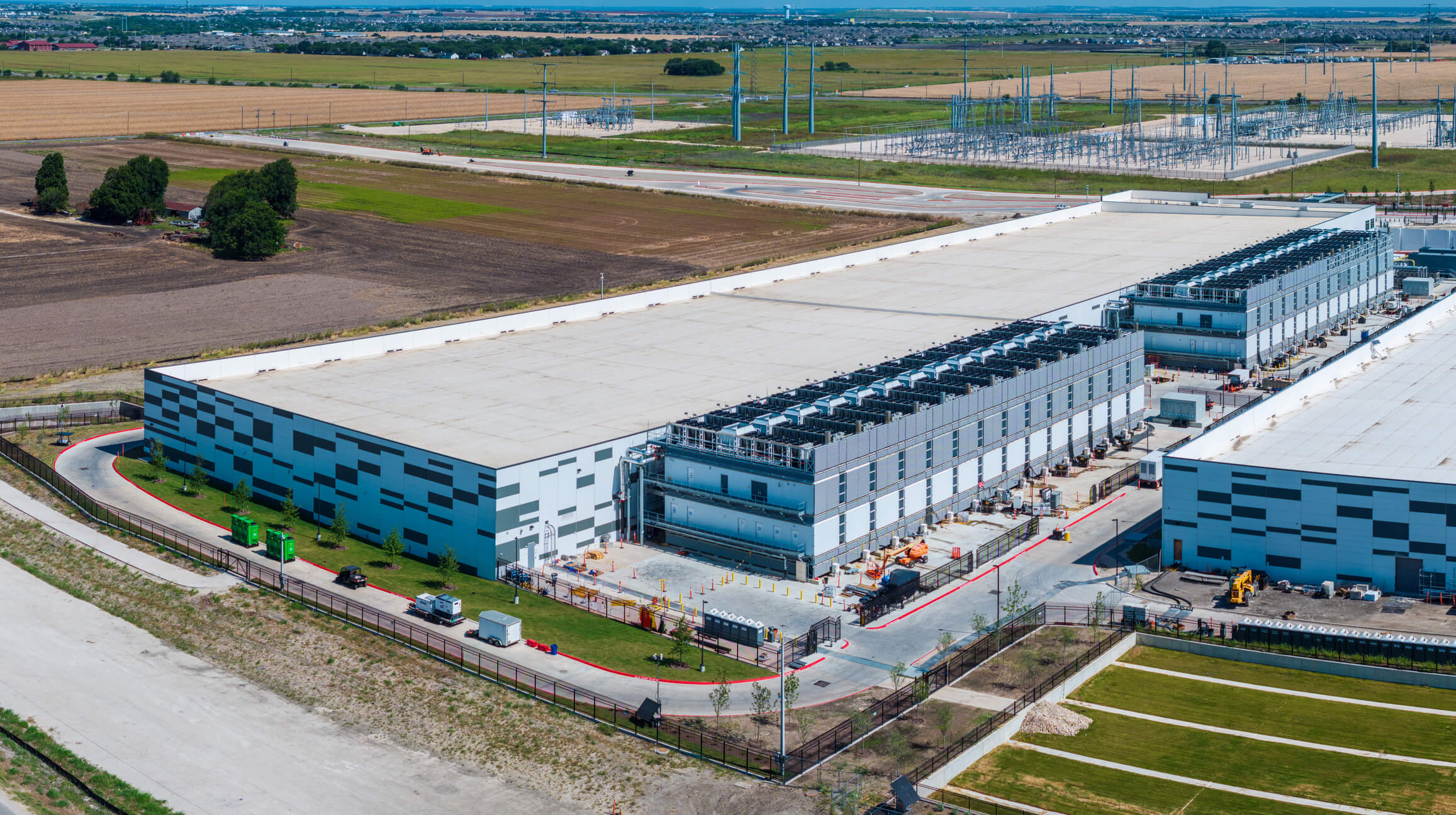
This week Amazon invested significantly in advanced nuclear power through a $500 million funding round for X-energy, a small modular reactor (SMR) design and nuclear fuel design company. Working in collaboration with utilities in Washington and Virginia, the partnership focuses on scaling up emissions-free energy for households, businesses, and power-intensive data centers. Amazon’s backing of advanced nuclear signals a positive shift in how large-scale energy users approach energy needs and environmental ambitions. It should also signal to Washington to address the policy barriers that unnecessarily inflate the costs of nuclear power.
Through this agreement, Washington utility Energy Northwest will build, own, and operate four SMRs that will bring power to the Pacific Northwest early next decade. In Virginia, utility Dominion Energy will get an SMR near its existing nuclear facility in Louisa County, roughly 60 miles northwest of Richmond.
Unlike traditional large nuclear reactors, SMRs can be manufactured at a smaller scale and transported to sites, making them a potentially quicker and more cost-effective solution for clean energy needs. Matt Garman, CEO of AWS, remarked, “We see the need for gigawatts of power in the coming years, and there’s not going to be enough wind and solar projects to meet the needs, and so nuclear is a great opportunity. Also, the technology is advancing to a place with SMRs where there’s going to be a new technology that’s going to be safe, and that’s going to be easy to manufacture in a much smaller form.”
X-energy, the technology provider, develops a Gen IV high-temperature gas-cooled reactor. Their Xe-100 is a module that produces 80 megawatts of electricity. X-energy sells these modules in four packs, producing 320 megawatts—enough to power roughly 300,000 American homes. The reactors are compact enough to be transported by truck and require just 22 acres of land for installation. Another reason X-energy went this route is that smaller modules will be easier and more economical to build. In an interview with C3 Solutions, X-energy CEO Clay Sell said,
“If you go huge, there are only one or two foundries in the world that can make the largest forgings for nuclear power plants. We did not want to be captive to one or two foundries anywhere in the world just from a market power standpoint. We wanted a size that we could procure from a wide array of sources here in the United States and globally.”
This investment follows similar commitments from other tech giants like Google, which recently committed to buying power from SMRs made by Kairos Power. This is another example of how innovative technologies are being harnessed to address today’s energy challenges.In fact, Amazon’s investment is the most notable yet because the company directly financed the construction of the reactors rather than merely agreeing to buy power from them. For nuclear to play a significant role in America’s future energy landscape, it’s essential to move beyond pledges and commitments, requiring substantial private sector investment and a willingness to take on risk. Amazon’s financial backing is a significant step in that direction.
It is also imperative for policymakers to address the regulatory barriers that increase nuclear project costs and timelines. C3’s recent white paper, Congress Must Capitalize on Nuclear Power Momentum, outlines many of the necessary policy reforms that will help make nuclear power cost-competitive and more readily deployable domestically and globally.
With the growing demand for energy and a range of innovative nuclear technologies emerging, Amazon’s investment should be the first of many to bring more clean, reliable electricity to the grid for decades to come.