A recent article in E&E’s Greenwire discussed potential increases in air pollution at Los Angeles’s port expansion project from displacing trucks with freight rail transportation. The article claims, “As other modes of transportation like trucks have gone green, they have left locomotives in the dust, making trains one of the dirtiest ways to move freight in California.” While trucks are indeed becoming cleaner, data clearly shows that rail has many economic and environmental advantages over trucking.
>>>READ: California’s Rail Regulation Is Bad Economic and Environmental Policy
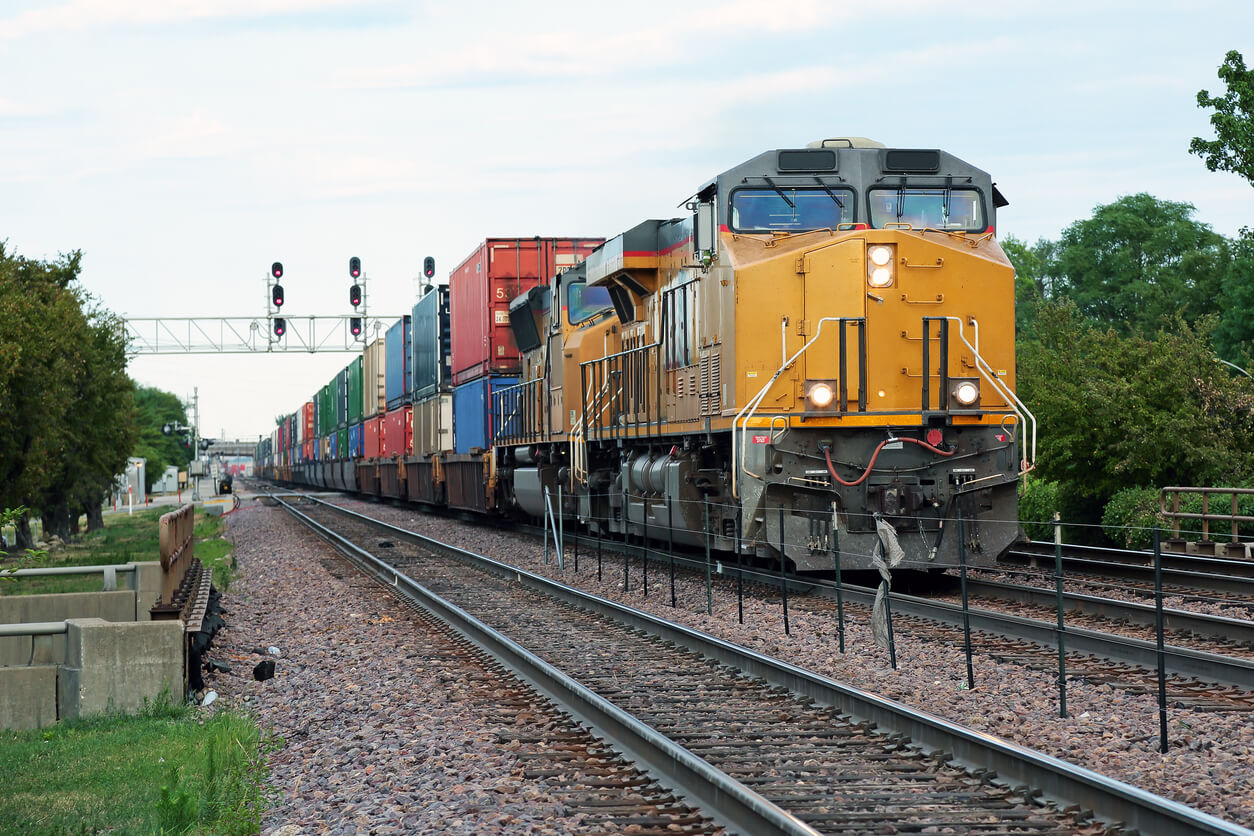
When considering energy efficiency and emissions affecting climate change, rail is the superior choice. The greenhouse gas impact is largely linked to fuel consumption, and trains, which can carry one ton of goods nearly 500 miles on a single gallon of diesel fuel, are three to four times more fuel efficient than trucks. Alex Scott, an associate professor of supply chain management at the University of Tennessee, uses Environmental Protection Agency data to show that trucking emits ten times more carbon dioxide emissions per mile than rail.
The Greenwire article notes that a shift from truck to rail as a result of the Port of Los Angeles expansion project would increase particulate matter (PM 2.5) and nitrogen oxide (NOx) at the port. Historically, trains have had the advantage in air pollution, too, producing fewer PM2.5 and NOx emissions.
Trucks have undoubtedly gotten cleaner, but California is far from reliant on zero-emissions heavy-duty vehicles. As Scott points out, over 90 percent of the trucks serving the Port of Los Angeles and Long Beach run on diesel. While newer trucks have lower PM2.5 and NOx footprint than older locomotives, newer trains will further reduce the environmental footprint of the freight rail industry. In fact, newer and re-manufactured freight trains lower PM2.5 and NOx emissions by as much as 90 and 80 percent, respectively. The fact is both modes of transportation have made significant strides in reducing the pollutants that contribute to air quality degradation and have adverse effects on human health and ecosystems.
Despite the environmental progress of both technologies, California is pushing hard for an all-electric transportation future through executive and regulatory dictate. The state has called for a ban on the internal combustion engine in new cars, and mandates for zero-emissions trucking and freight rail. For rail, the California Air Resources Board rule also requires companies to pay into a spending account to purchase or lease zero-emission locomotives in the future, which cumulatively will cost billions of dollars annually and very likely force some rail companies out of business, which California’s regulators have acknowledged in crafting the regulation. Whether it is by truck or by rail, forcing companies into more expensive modes of transportation will have higher costs that ripple throughout the economy for families and businesses.
California’s regulatory crusade also demonstrates one of the environmental impacts that economists typically consider but policymakers and regulators do not which are unintended environmental consequences. Mandating drivers and companies switch to a zero-emission technology could be prohibitively expensive for consumers who have to pay higher upfront costs for these vehicles. This could result in businesses holding onto their older vehicles longer which would stunt some of the progression toward cleaner technologies.
>>>READ: What Falling Battery Prices Mean for Clean Energy
In the case of California’s freight rail regulation, high regulatory costs would also push freight from rail to truck, which would offset the intended environmental benefits of adopting zero-emissions locomotives across the range of targeted pollutants. Scott’s analysis of the rule shows that switching from rail to freight would offset 74 percent of the estimated PM 2.5 reductions and 31 percent of the estimated NOx reductions.
Shifting from rail to truck would also increase road congestion which produces stop-and-go conditions, decreases fuel efficiency and increases emissions. Trains, however, operate on dedicated tracks that are not subject to the same level of traffic congestion. This means that they can maintain a consistent speed and optimize fuel use more effectively than trucks, which frequently encounter delays and variable speeds. Reduced congestion also enhances the overall efficiency of supply chains.
From serving farmers to auto manufacturers and everything in between, both trucks and rail are instrumental in getting the goods that Americans want to where they need to be. Both are necessary to provide efficient supply chains and create competition for the best service at the lowest possible cost. Transportation policy should empower the market to drive choices to meet the needs of consumers across the country.