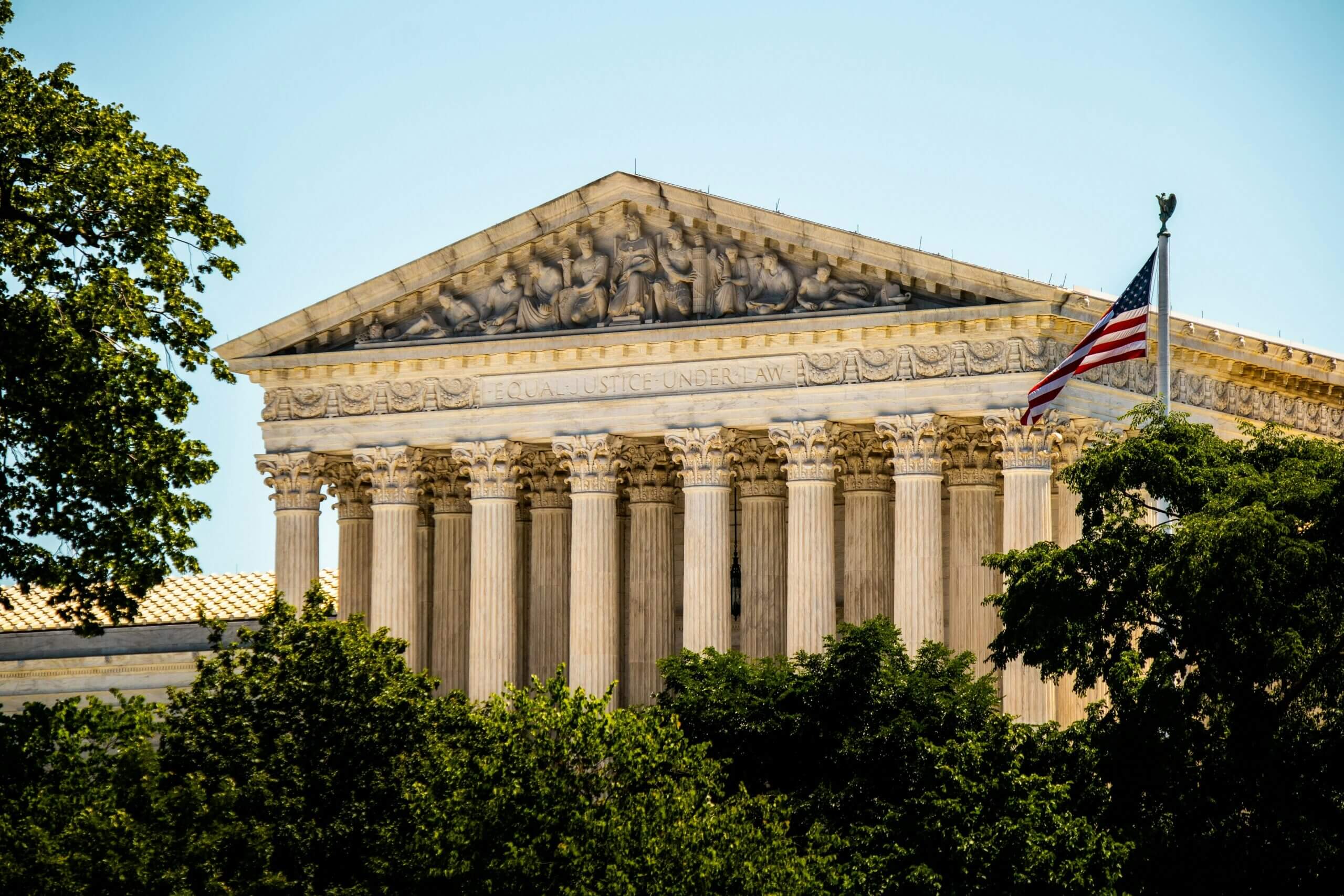
Skeptics of government overreach have long believed that Congress cedes far too much authority to unelected bureaucrats. While the killing of the Chevron deference by the Supreme Court is a momentous step in the right direction, the real impact will come when elected policymakers step up and do their jobs.
Under a 40-year-old legal precedent, Chevron deference ruled how courts dealt with ambiguities in federal laws. In the 1984 decision in Chevron v. Natural Resources Defense Council, the Supreme Court ruled that when Congress passed a law with broad language, the courts would defer to the agency’s interpretation of the law. Under Chevron, courts would defer to an agency’s regulations if the statutory language was ambiguous and if the agency’s interpretation was reasonable. There are exceptions to Chevron’s application where the Supreme Court looks for clear congressional intent for significant or “major” regulations.
>>>READ: In Sackett v. EPA, Supreme Court Votes to Affirm Private Property Rights
At face value, deference to the agencies makes sense. If Congress writes legislation with vague language, sometimes intentionally, the agencies have the technical know-how and specialized expertise to implement those laws.
Throughout Chevron’s existence, it has had support and opposition from both sides of the political aisle. Conservatives initially supported Chevron because they worried about the power of unelected, unaccountable judges. Support also stemmed from whose party controlled the executive branch at the time. A Reagan-era interpretation of the law by the Environmental Protection Agency would look different than a Clinton-era interpretation.
Over time, however, limited government types became more concerned about deference to the agencies. In a review of Thomas Merril’s book, The Chevron Doctrine: Its Rise and Fall, and the Future of the Administrative State, legal scholar Jonathan Adler writes:
The rate at which courts accepted agency interpretations appears to have increased only a small amount, but the universe of agency actions under review may have shifted under the new rules. The availability of Chevron deference appears to have encouraged agencies to be more aggressive in interpreting the statutes they administer, unearthing new regulatory authority in old statutes when Congress refuses (or simply cannot be bothered) to enact statutory reforms. In this way the doctrine “facilitated the transfer of power from Congress to the administrative state.”
It is this effective transfer of power that fuels Chevron’s critics. The doctrine emboldens agencies to stretch the bounds of statutory authorizations, and further encourages administrators to embark on new policy initiatives by exploiting the ambiguity of existing statutory delegations instead of turning to Congress.
The aggressiveness from unaccountable government agencies and the growth of the administrative state was evident in the recent case before the Supreme Court, Loper Bright Enterprises v. Raimondo. Loper Bright Enterprises is a family-owned and operated group of herring fishermen operating out of Cape May, New Jersey. A 2020 regulation from the National Marine Fisheries Service said that for herring fishermen to operate, they must have a monitor on board to ensure the fishermen are complying with federal regulations. Not only would a regulator occupy valuable space on a smaller boat, but the fishermen would need to pay for the monitor’s $700 per day salary, eating up about 20 percent of the company’s profits.
Even if one supports a “bureaucrat in a boat” regulation paid for by the herring fishermen, the law never permitted it. Herring fishers did not qualify in the three categories of commercial fishing boats to have a monitor paid for by the company under the Magnuson-Stevens Fishery Conservation and Management Act. Until the about-face in policy from the agency, the National Marine Fisheries Service paid for herring boat monitors themselves.
Loper Bright and other fisheries sued, where the district court said that the statute allowed for the regulation. When Loper Bright appealed, the D.C. Circuit upheld the decision and deferred to the agency’s interpretation. It was only until the case made it to the highest court that the Supreme Court overruled the Chevron doctrine.
>>>READ: After West Virginia v. EPA, Time for Elected Officials to Step Up
Lathan & Watkins, one of the law firms representing the fishermen explained, “The Supreme Court held that under the Administrative Procedure Act, courts must exercise their independent judgment in deciding whether an agency has acted within its statutory authority. Courts therefore cannot defer to an agency interpretation of a statute simply because a statute is ambiguous.”
For cases that made it to the Supreme Court, there has been far less reliance on the Chevron doctrine to defend regulation in recent years. Some agencies have curtailed reliance on Chevron to ensure that the rulemakings pass legal muster. Nevertheless, the Supreme Court’s recent decision is critical. As with Loper Bright, courts of appeals relied on the Chevron deference recurrently, so it was still very problematic for many businesses. Furthermore, it should serve as a wake-up call to our elected officials. Representative Garret Graves (R-LA) rightly emphasized that:
The court is exactly right in that laws should only be written by Congress – not through the unilateral actions of Republican and Democrat presidents and bureaucrats. Now, the onus is on Congress to move away from dysfunction and toward doing what is best for the American people, rather than focusing on the politics. We will see if our politicians are up to the task.
The public’s confidence in American institutions has eroded significantly, and for good reason. Last year, the share of the American public that had a “great deal” or “quite a lot” of confidence in Congress was a bleak 8 percent. If Chevron’s death means that Congress will rise from the ashes like a phoenix and legislate with clarity, the decision will be all that more meaningful.