The Plastic Problem
From candy wrappers to shampoo bottles, tupperware to surgical gloves – our day-to-day lives are reliant on single-use plastics. While single-use plastics serve an important purpose in certain applications, the emissions that are needed to make them and the pollution that they can lead to are serious environmental problems.
According to the United Nations Environment Programme, the world annually produces about 400 million tonnes of plastic waste each year. Less than 10% of that amount is recycled. The rest is either dumped in a landfill, burned, or discarded as litter.
>>>READ: Solving our Plastic Problem
Despite recent efforts, there is an estimated 75 to 199 million tonnes of plastic waste in the ocean. Some microplastics are even making it all the way to Mount Everest. And while we’ve all seen the horrifying videos of animals and sea creatures suffocating on straws or plastic six-pack rings, there is now evidence that we are also affected.
A recent study showed that humans consume somewhere between 0.1 to 5 grams of plastic a week. For reference, 5 grams would be the equivalent of eating a credit card whole. The cumulative effect of plastic consumption is a worrisome unknown.
With plastic production on the rise, the search for a less toxic substitute is becoming crucial.
Enter Sway: A Seaweed-Based Alternative
A San Francisco-based startup called Sway is using seaweed to generate a replacement for single-use plastics. This colorful seaweed substitute has a number of upsides. First, it’s home-compostable. Sway’s bioplastics can be composted in your backyard and will completely disappear in four to six weeks – a massive improvement to current plastics, which take hundreds to thousands of years to break down.
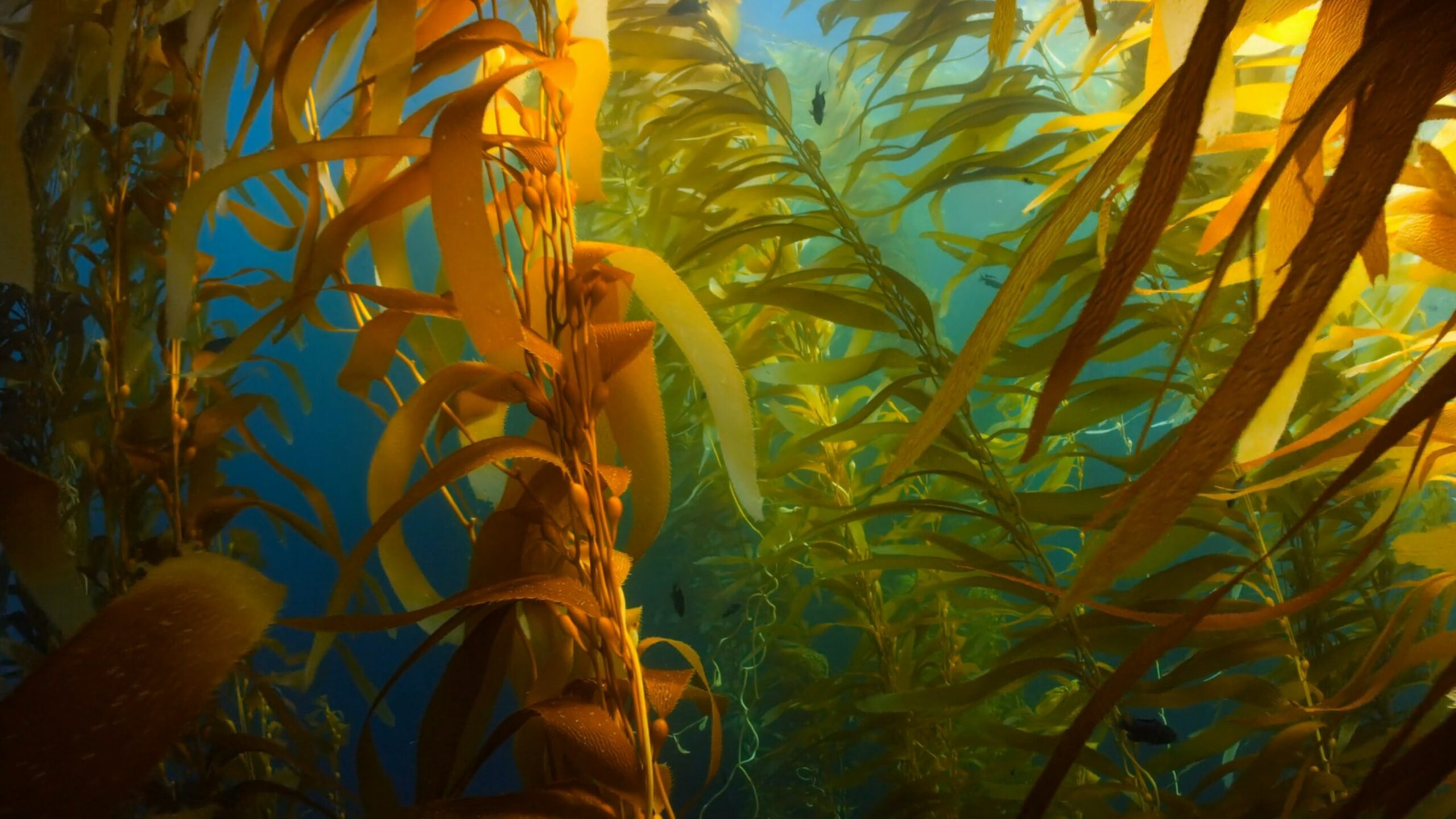
Second, the bioplastic is sourced from seaweed farms, which can be used to pull greenhouse gases out of the atmosphere. Seaweed – just like other plants – absorbs CO2 as fuel. Seaweed, however, grows at a much faster rate than land-based plants, meaning it can remove more CO2 from the atmosphere. With this in mind, Julia Marsh, Sway’s CEO, aims to make their product carbon negative.
Fighting Climate Change with Nature
Using seaweed to sequester CO2 from the atmosphere falls under the category of natural climate solutions, which are among the most effective forms of emissions reductions at our disposal. Other examples of nature-based climate solutions include tree planting or the use of cover crops.
>>>READ: Running Tide Technologies: Farming Kelp to Fight Climate Change
Using seaweed forests to pull down greenhouse gases appears to be a promising solution to meaningfully reduce CO2 emissions. Tim Flannery, the former head of the Australian Climate Commission, remarked in an interview: “One study suggests that if you cover 9 percent of the world’s oceans in seaweed farms, you could draw down the equivalent of all our current emissions – more than 40 gigatons a year.”
Increasing seaweed farms to cover 9% of the ocean would be a drastic move. Still, Flannery’s remark demonstrates the potential of seaweed farms in removing CO2 from the atmosphere.
Next Steps for Sway
Sway’s technology and design seem promising. They were one of the eight finalists in the Tom Ford Plastic Innovation Prize and have won financial backing from major stores, including Target, CVS, and Walmart.
Their first in-market pilot is scheduled for late 2022. Sway will start rolling out alternatives to shopping bags and packaging for online clothes before expanding to other types of single-use plastics.
Luke Brennan is a writer and software developer originally from Pittsburgh.