According to the U.S. Energy Information Administration, wind energy accounts for 10.2% of total electricity generation in the United States, making it the country’s largest source of renewable energy. Now, Laramie, Wyoming-based Airloom Energy is debuting a new type of wind energy technology that differs significantly from current offerings on the market.
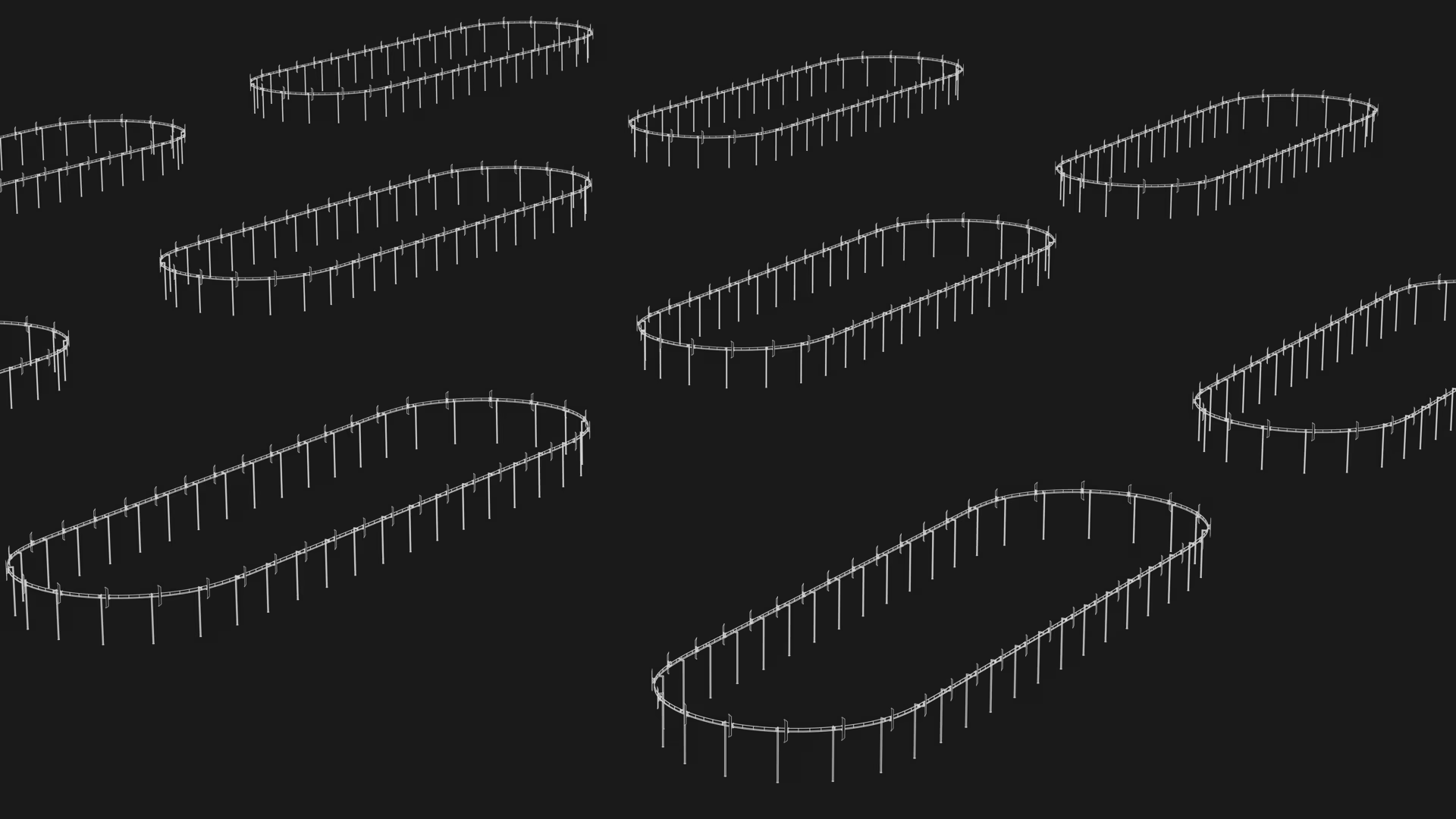
In contrast to conventional industry solutions that rely on rotating-blade turbines, Airloom Energy’s innovative wind system features low-height, modular turbines arranged in a rectangular configuration. Airloom employs vertical airfoils about 30 feet in height that travel continuously along an elevated, oval-shaped track rising 80 feet above the ground. The airfoils harness wind energy by gliding horizontally around a loop, similar to a roller coaster circling its path.
This compact design, leveraging smaller, standardized components, is significantly more straightforward to transport and install than standard horizontal-axis wind turbines. By relying on low-cost, mass-manufacturable parts, the system also reduces costs, improves scalability, and requires lower maintenance. The company notes that its low-profile, track-based wind system can be shipped using standard logistics networks and installed by regular crews using commonly available industrial equipment, such as forklifts.
In contrast, conventional turbines are bulky by default and therefore require specialized materials that must be transported with custom equipment and installed by skilled personnel wielding large cranes. These factors not only drive up the cost of wind power but inhibit growth in the $125 billion sector.
“Traditional horizontal-axis wind turbines (HAWTs) are increasingly less cost-competitive and difficult to construct. Made in low volumes and at massive scale, this approach has resulted in restricted innovation, limited sites for deployment, and a stagnation in levelized-cost of energy (LCOE),” Airloom said in a press release.
>> Could AI Make Permitting Faster?
On June 26, the company announced a groundbreaking pilot site near Rock River, Wyoming: a utility-scale turbine facility backed by Bill Gates’s Breakthrough Energy Ventures. The pilot is expected to deliver around 150 kilowatts (kW) of electricity. Commercial-scale operations are expected to come online in 2027 or 2028.
A report from the North American Electric Reliability Corporation (NERC) found that extreme heat is threatening to induce energy shortfalls in some parts of the country. Airborne’s patented, U.S.-made turbines offer a cost-effective, energy-efficient solution that can supplement and perhaps even replace conventional wind generation technology.