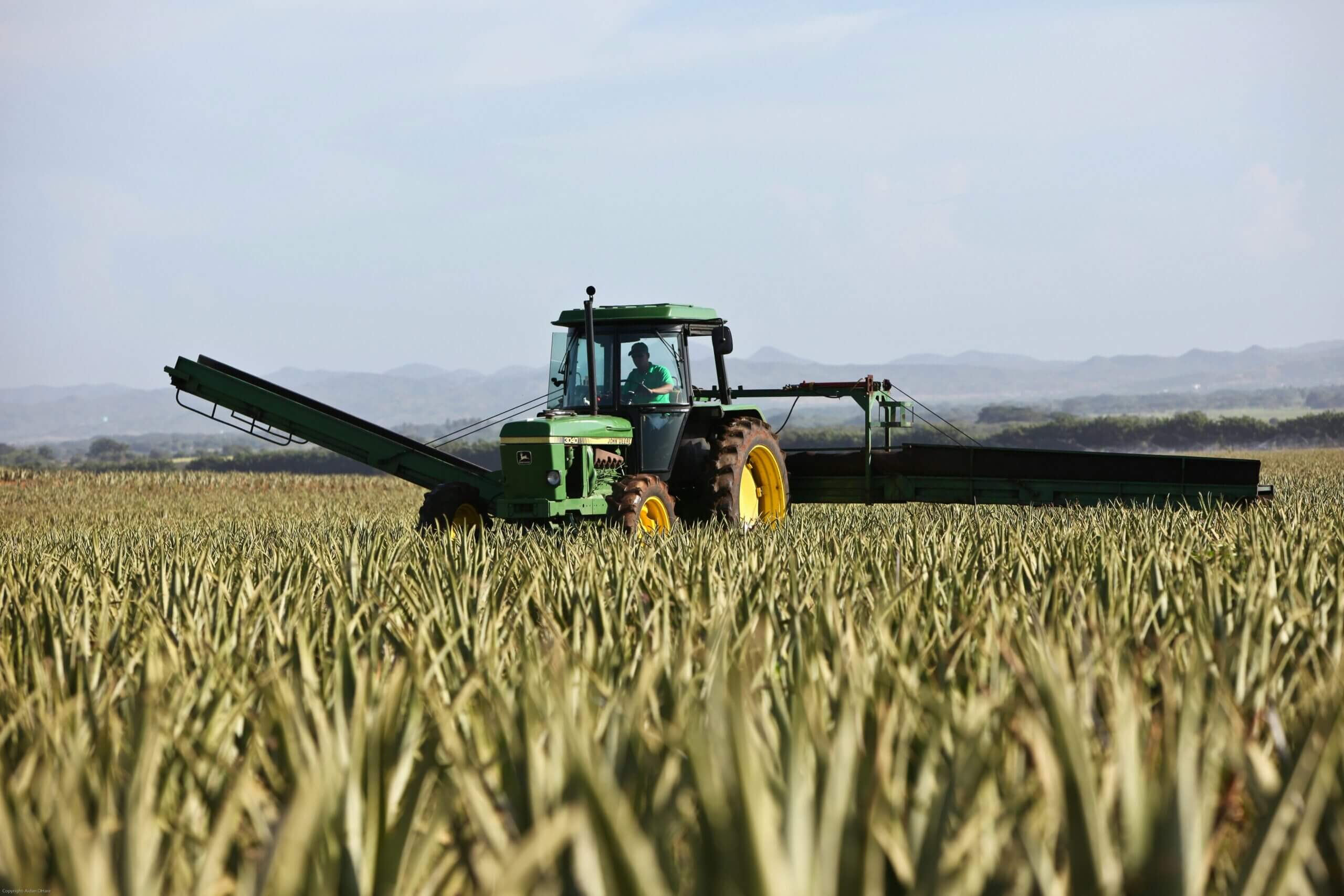
As invasive plants increasingly develop resistance to standard chemical sprays, the world’s leading agricultural companies are turning to artificial intelligence (AI) to combat the rising threat of superweeds.
Global biotechnology company Bayer is using AI-powered solutions like “CropKey” to discover effective weed-killing formulas. CropKey is an innovative digital platform developed by the German seed-and-pesticide supplier to correlate a weed’s protein structure with a chemical compound that targets it––much like pharmaceutical companies use AI to screen for molecules that will bind to specific biological targets when developing a new drug. Until recently, scientists at Bayer had to manually screen and select molecules, or ‘keys,’ from a vast library of 2.6 million compounds when creating a new formula, an arduous and physically demanding process that could take upwards of two or three years.
>>>READ: This Game-Changing Seed Technology Could Transform the Way We Farm
“You need to be able to kill one kind of plant without killing other kinds of plants, but also without harming fish, insects, birds. It needs to break down in the atmosphere,” says Bill Anderson, chief executive of Bayer, discussing the challenges of R&D. “The chance of getting it right without the computer methods is vanishingly small.”
Now, data-driven technologies such as CropKey promise to streamline the development phase from over a year to just a few months, offering a more efficient solution.
Not only are these new AI systems more precise than their conventional counterparts, but they also control for pre-defined safety and sustainability standards, such as adverse health effects in humans. The major consequence of this is to accelerate the number of new chemical formulas coming to the market.
In 2020, Bayer developed a new product called Icafolin with the help of CropKey. The agribusiness firm says Icafolin will be the first new mode of action herbicide in more than three decades when it launches in Brazil in 2028.
>>>READ: Meet the Tree-Free Alternative Trying to Disrupt the Paper Industry
Bayer is not the only agricultural giant that has harnessed AI to engineer new crop protection solutions. Rivals like Syngenta, BASF, and Corteva are also leveraging high-tech tools to roll out novel weed-busting formulas. These efforts are not limited to herbicides for weeds but also span insecticides, fungicides, and pesticides.
In Brazil, approximately 60% of nuisance plants have developed resistance to at least one active ingredient found in commercially available herbicides. This proportion is expected to grow as the effectiveness of traditional herbicides like glyphosate continues to wane. In a country where over 44 million hectares are planted with soybeans, solutions like Bayer’s will be critical to stabilizing food production and building more resilient farming systems.
Nathalie Voit is a freelance content creator and a graduate of the University of Florida. She is an alumni of The Heritage Foundation’s Young Leaders Program.