Everything vintage is in again. Mom jeans. Cargo pants. Molten salt nuclear reactors.
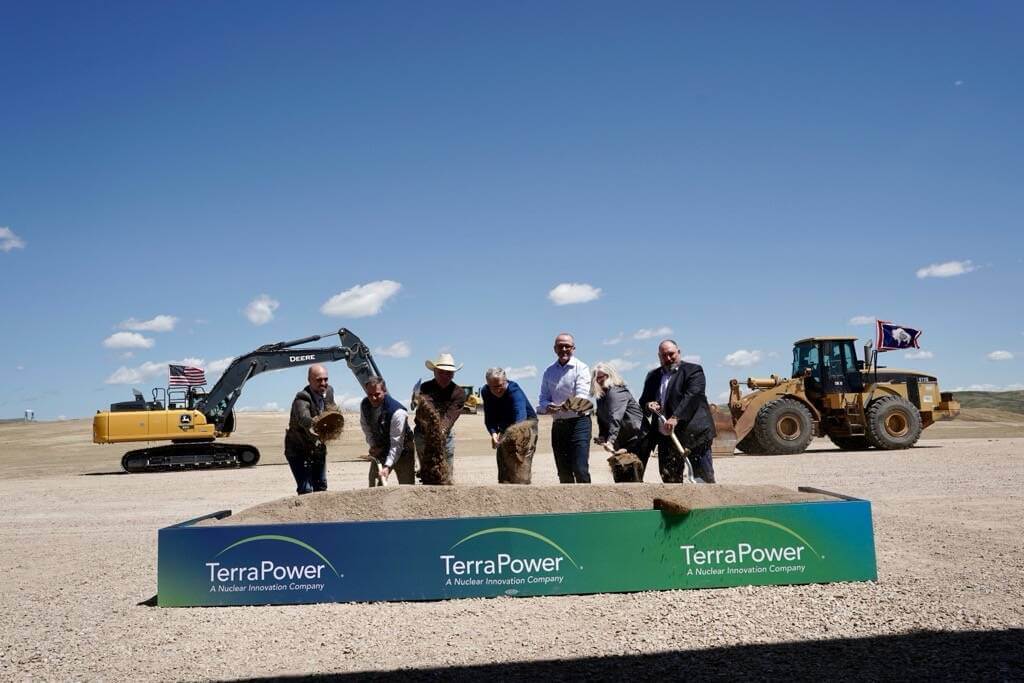
This week, TerraPower, an advanced nuclear power company co-founded by Bill Gates in 2008, broke ground on its Natrium reactor in Kemmerer, Wyoming. While the company still needs construction and operating permits, the ground-breaking represents a landmark moment for advanced nuclear power in the United States. The next generation of nuclear can play a significant role in meeting America’s growing energy needs and environmental ambitions. But turning a handful of ribbon-cutting ceremonies into a true nuclear renaissance will require bold policy reforms.
>>>READ: The Folly of an SMR-Only Nuclear Strategy
TerraPower is one of many different types of advanced reactors that are in concept, design or operation. Unlike the 94 large, light water reactors (cooled with water) running in the U.S. today, Natrium uses liquid sodium as a coolant. While Natrium’s technology is advanced, the concept of molten salt reactors (MSR) has been around since the mid-20th century. In the 1960s, Oak Ridge National Laboratory developed a small 8-megawatt MSR prototype, which they operated and researched on through the 1970s. Natrium builds on the decades of work from Oak Ridge and Idaho National Laboratory on reactor technology and fuel development.
In addition to being even safer than the already-safe light water reactors, TerraPower also has molten salt-based energy storage system, which functions much like a battery and can boost the power from 345 megawatts to 500 megawatts for five hours.
Replacing a retiring coal-fired facility, TerraPower’s plant has a projected cost of $4 billion and aspires to be supplying electricity in 2030. It is one of two cost-share projects funded by the Department of Energy’s Advanced Reactor Demonstration Program (ARDP). Funded through the Bipartisan Infrastructure Law, ARDP aims to lower the cost of first-of-a-kind advanced reactor technologies. Programs like ARDP may help de-risk technologies and get a few advanced reactors off the ground, but ambitious policy reform is necessary to de-risk the politicization of nuclear energy.
Congress and the Nuclear Regulatory Commission should implement numerous reforms to make nuclear energy more cost-competitive in the U.S. Ensuring that licensing and permitting is efficient and predictable, modernizing outdated regulations, and opening markets to investment and trade will help lower costs and establish market certainty. While not all of the nuclear industry’s increased costs stem from excessive regulation, a “regulated stairway to high nuclear construction costs” has undoubtedly been a driving factor.
>>>READ: Congress Considers the State of Nuclear Fuel Recycling and Management
In almost every case, the tightening of the regulatory screws has increased costs for diminishing marginal returns on public health and safety and the environment – practically to a vanishing point. It is much more plausible to reason that the antiquated regulations and policies have artificially inflated the cost of new nuclear power, inhibiting economic and environmental progress. Whether it is research and development, investing in new plants, operating existing ones, or fixing a broken spent fuel management regime, C3 Solutions has identified many policy fixes to encourage nuclear innovation, cost reduction and deployment.
If all goes as planned, the shovels put in the ground this week will result in emissions-free, affordable, reliable power for the city of Kemmerer. If Washington can do its job by fixing broken nuclear energy policies, TerraPower should be the first of many advanced reactor deployments in the U.S.